Raccoon in the attic in Columbia, SC: what to do first
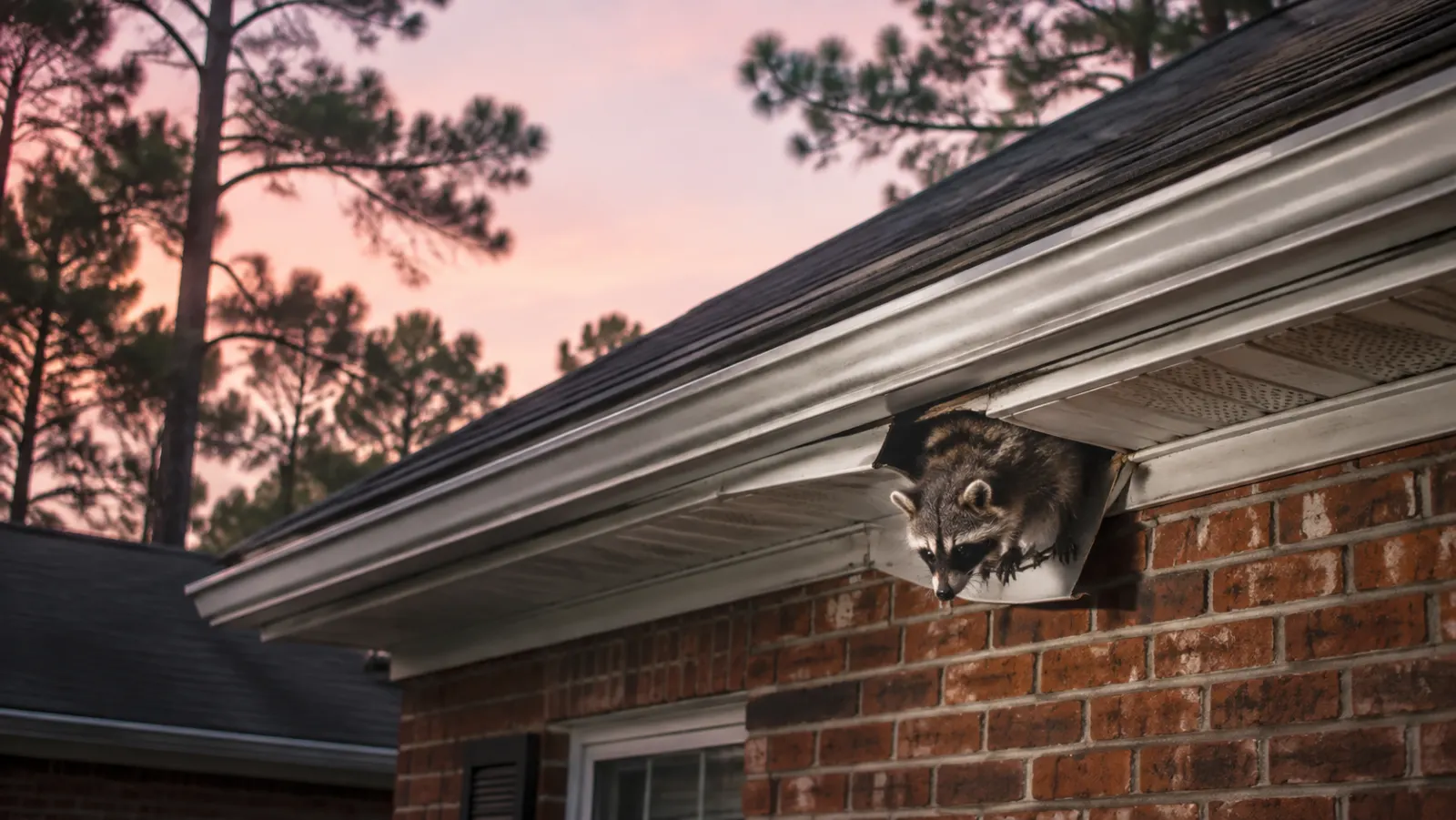
Heavy footsteps over the bedroom around midnight, then a soffit corner bent outward like someone opened a can with their thumbs. That is a raccoon. Here is what to do tonight, what you can genuinely handle yourself, and the point where the job stops being yours.
On this page
Four things to do tonight, none of them on a ladder
A raccoon in your attic needs four decisions from you in the first 24 hours, and all four are free. Do these before you buy a trap or climb anything.
- Stay out of the attic and keep the dog off the pull-down stairs. An adult raccoon is 10 to 20 pounds of teeth and claws with nowhere to run when you come up through the hatch.
- Write down the time and the spot. Where the sound is, when it starts. Raccoons leave shortly after dark and return before dawn, which separates them from squirrels, loud at sunrise.
- Walk the outside at dusk and look up. Soffit corners where the gutter meets the fascia, roof vents, gable ends, chimney. You want an opening with the edges bent outward and the grime rubbed clean around it.
- Do not seal anything. This is the mistake that turns a $400 problem into a drywall job. Details below.
What the attic looks like after a season of waiting
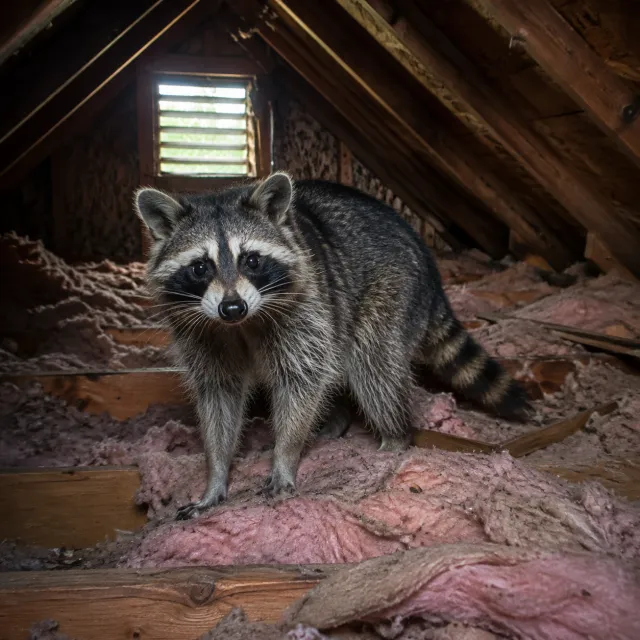
Waiting turns a raccoon in the attic into a health problem and a repair bill, in a predictable order. Picture the space above your bedroom ceiling in a Columbia July. The insulation is no longer a blanket, it is flattened into trails where a 15-pound animal walks the same route nightly. The flex duct to the back bedroom has been pulled off its collar, so your air handler is now cooling the attic. And in one corner, the raccoon has picked a bathroom, which it uses every single night.
That corner is the part worth understanding. Raccoon latrines carry Baylisascaris procyonis, raccoon roundworm, and CDC reports that a single worm can produce more than 100,000 eggs a day, that the eggs take two to four weeks to become infectious, and that they can survive in the environment for years. CDC lists attics as a common latrine site. The pile sitting over your child's room in April is still viable in the insulation you pull out in November, which is why cleanup means an N95 and a mist bottle, not a shop vac and good intentions.
Then there is the ceiling. The urine soaks into drywall in one spot, and the brown ring that shows up over your bed is the visible half of it. If the animal that moved in was a pregnant female, the sound changes in a few weeks from footsteps to a thin chittering cry directly above the headboard at 3 a.m., while your family sleeps under it. None of that is exotic. It is the ordinary arc of one raccoon and one open soffit over one Midlands season.
What you can actually do yourself
Plenty of raccoon work is genuinely DIY, and a denning female is easier to discourage than most people expect. Raccoons pick an attic because it is dark, quiet and warm. Take away all three and many leave on their own within a few nights.
- Light and noise. A work light left burning near the den area plus a radio on a talk station makes the space a bad nursery. Cheap, safe, and it works often enough to try first.
- Cut the food supply. Bungee the trash lids, bring pet bowls in at night, drop the bird feeders for two weeks, pick up fallen pecans and figs. A Columbia yard in fall is a buffet.
- Trim the bridge. Those old Shandon and Forest Acres oaks touching the roofline are the on-ramp. Six to eight feet of clearance removes it.
- Test the hole. Stuff crumpled newspaper loosely into the suspected entry at dusk. Pushed out by morning means the hole is live. Untouched three nights running, outside kit season, means the attic is probably empty.
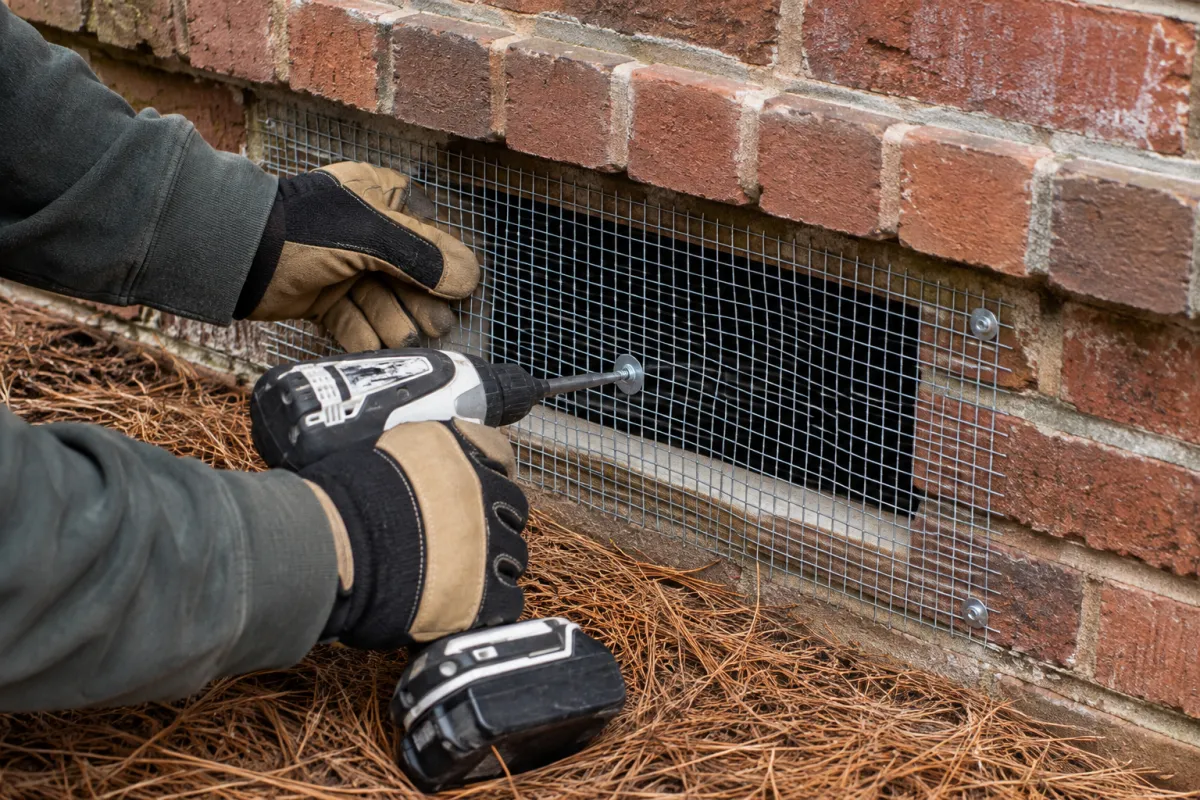
- Cap the chimney. An uncapped flue is a hollow tree with a better view, and a stainless cap closes one of the two most common Columbia entries for good, once you know nothing is inside.
- Leave the latrine alone until you have a mask. CDC guidance if you do it yourself: N95, mist the area lightly so nothing goes airborne, bag it, never dry-sweep it.
March through May in the Midlands, assume there are babies
Timing decides the whole approach, and the South Carolina calendar is tight. SCDNR's raccoon guidance says raccoons breed mainly in February and March, with young born in April or May. A female that moves into a Columbia attic in late winter is not squatting, she is nesting. Kits are born blind and cannot climb out for weeks, so a hole sealed in spring seals them in. What follows is a smell through the vents in about a week, then a wall you have to open. If you hear crying rather than walking, stop and get help.
Five signs the raccoon in your attic is past DIY
Some raccoon jobs are simply beyond self-treatment, and these five signs are the honest line. If one of them describes your house, stop working the problem yourself.
- You hear crying, chittering or scrabbling in a wall cavity. That is a litter, and getting kits out by hand so the mother follows is skilled work.
- You have found a latrine. Contaminated insulation is a containment job, not a trash-bag job.
- More than one entry point, or a hole above the second story. Roof-edge work on a two-story Columbia colonial is where homeowners fall.
- The raccoon is behaving strangely. Stumbling, circling, drooling, unafraid of people. SC DPH confirmed 101 rabid animals statewide in 2025, with raccoons among the wildlife most often involved. Do not approach it, keep pets away.
- You caught one and now you are stuck. South Carolina does not allow relocating trapped furbearers; SCDNR requires release on site or humane euthanasia. Most people learn that rule with a full trap on the patio.
The sensible next step: get it priced
If you recognized your house in that list, a phone call is the cheapest move you have left. Call (833) 246-4378 and we connect you with a licensed local provider holding an SCDNR Wildlife Control Operator permit for the Columbia area. Tell them where the noise is, what time it happens, and whether you have heard crying. They will give you a price and the earliest window they can offer, and you are free to book or not. Same-day and emergency wildlife calls depend on a participating provider having a technician free near you and on how busy the day is. None of it is guaranteed, and availability moves with the market and the calendar.
What a raccoon in the attic typically costs
Raccoon attic jobs in Columbia are priced after an inspection, because one animal in a soffit and a mother with four kits over the master bedroom are different afternoons. The figures below are typical market ranges from Angi's 2026 cost data, not a quote for your house.
| Stage | Typical range | Notes |
|---|---|---|
| Inspection | $100 to $300 | Often credited toward the job if you book it |
| Trap and remove | $150 to $400+ | Angi average near $400; more with kits or multiple animals |
| Attic job with exclusion | $500 to $1,500 | Driven by entry points, roof height and materials |
| Cleanup and reinsulation | Quoted separately | Depends on latrine size and ruined insulation |
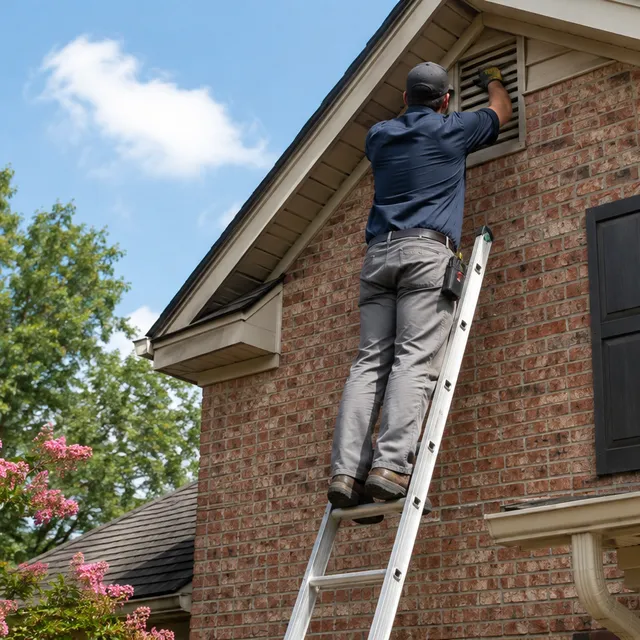
Here is the reassuring part, true of nearly every call: this is a fixable problem with a clear end. One animal, one hole, one afternoon of metal screwed into framing, and the house is yours again. Columbia homeowners who call within a week of the first footstep usually never need the cleanup line on that table. For the longer version of how trapping and sealing are done, read the full Columbia raccoon removal page, check squirrel removal if the noise turns out to be a morning sound, and see all services and costs for what South Carolina law lets a homeowner do.
Raccoon in the attic: questions Columbia homeowners ask
There is a raccoon in my attic. What do I do first?
Stay out of the attic, write down the time and spot where you hear it, and go outside at dusk to find the open hole. Those three steps cost nothing and give a permitted operator most of what they need for a phone quote. The one thing not to do on night one is seal the entry, because a trapped raccoon will tear through drywall, ductwork or a soffit to get back out.
Can I just close the hole while the raccoon is out feeding?
Not between roughly March and July, and not before you know the attic is empty. SCDNR notes that South Carolina raccoons breed in February and March with young born in April or May, so a female denning in a Columbia attic in spring almost certainly has kits that cannot climb out. Sealing then leaves the litter to die inside the ceiling, which turns a removal job into a demolition job. Outside kit season, closing the hole still only works if you have confirmed nothing is home.
How much damage can a raccoon do in one season?
Enough to be seen from the driveway. A denning raccoon flattens insulation into trails, tears loose ductwork, urinates in one area until the ceiling below stains, and establishes a latrine in the insulation. The latrine is the part that matters for health: CDC reports that a single raccoon roundworm can produce more than 100,000 eggs a day, and that the eggs can survive in the environment for years.
Is it safe to keep sleeping in the house?
Yes, for the most part, as long as nobody goes into the attic and pets stay away from the access hatch. A raccoon in a sealed attic space is not going to come down into a bedroom. The real exposure risks are handling the animal, handling its droppings, and letting a dog corner it, which is why SC DPH stresses keeping dogs, cats and ferrets vaccinated. If a person or pet is bitten or scratched, call a doctor or vet the same day.