Bat removal in Columbia, South Carolina
Bats in a Columbia attic are handled by exclusion, never by poison, and only on the calendar SCDNR sets: March and April or August through October. This page explains how to confirm it is bats, the rabies rule that applies to every bat found indoors, how exclusion works, what it costs in 2026 and how to get a price on the call.
On this page
How to tell it is bats and not something else
Bats are the quiet tenants. You rarely hear them; you smell them, or you find them. The tells Columbia homeowners describe:
- Dark staining and a greasy rub mark below a gable vent, a gap in the ridge cap or the top of a chimney flashing.
- Droppings piled below one spot on a windowsill, deck or porch: dry, crumbly, glittery from insect wings. Rodent droppings do not crumble.
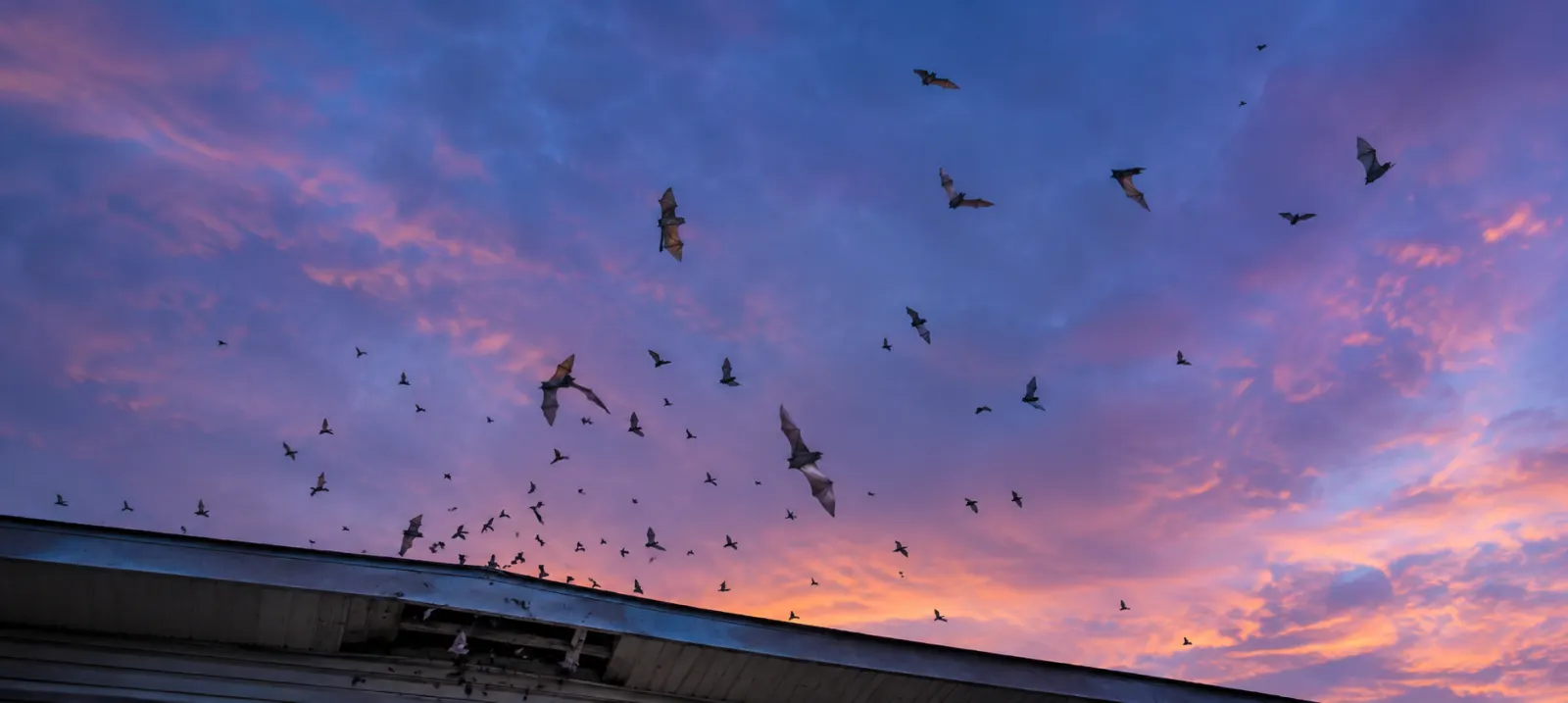
- A stream of small animals at dusk leaving the roofline, 15 to 30 minutes after sunset.
- A single bat in a bedroom or living room, which almost always means a colony upstairs.
Bats are protected, and the calendar is the law
Bats in South Carolina are protected wildlife, and the state's answer to a colony in your attic is exclusion, not extermination. SCDNR's nuisance-bat guidance is specific: the right time to exclude is early spring (March and April) or fall (August through October). From May through mid-July, mother bats are raising pups that cannot yet fly, and sealing the roof then traps the young inside. A permitted operator will not do it, and you do not want the result: dead pups in the walls in a South Carolina July.
The rabies rule for bats is stricter than for anything else. SCDNR advises that every bat found inside a home be submitted for rabies testing through the South Carolina Department of Public Health. If a bat was in a room where someone was sleeping, treat it as a possible exposure and call your doctor the same day. Bat bites are small enough to miss.
How exclusion actually works
Dusk watch and inspection
The operator watches the house at dusk to count exits and bats, then inspects the roofline in daylight. Bats use gaps as small as 3/8 of an inch, so this takes longer than a raccoon inspection and it is the part that decides whether the job works.
One-way devices on every active exit
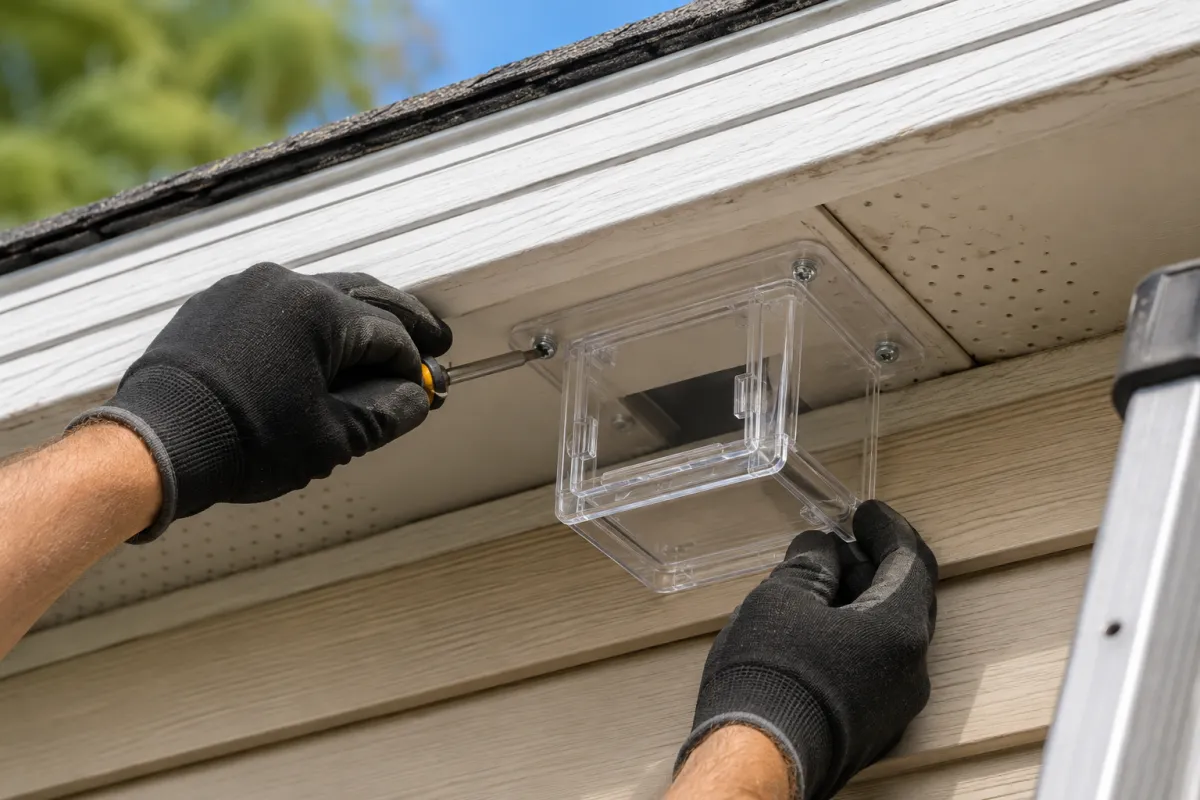
Tubes or netting go over each exit the bats use. They fly out at dusk to feed and cannot get back in. The devices stay up for several nights until the roost is empty.
Seal everything else
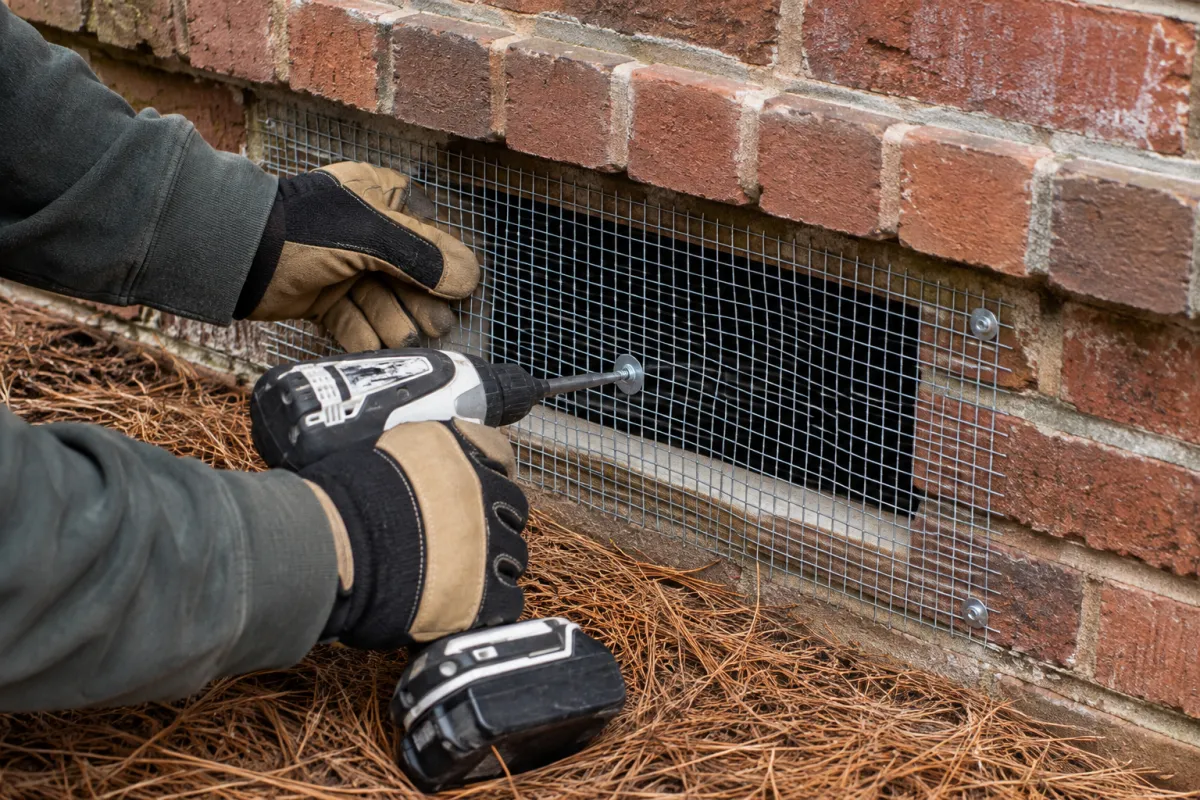
Every other gap of 3/8 inch or more gets caulked, screened or flashed, including the ones nobody has used yet. Then the one-way devices come down and those last holes are closed. Skip this step and the colony is back the next spring; bats return to the same roost year after year.
Guano cleanup
A colony that has been up there for years leaves a lot of guano, and disturbed guano can carry the fungus behind histoplasmosis. Cleanup is done with respirators and negative air, priced by the volume of material and insulation to remove.
What bat exclusion costs in Columbia
| Job | Typical range | What moves the price |
|---|---|---|
| Inspection and dusk count | $100 to $300 | Often credited against the job |
| Exclusion, small group of bats | $250 to $600 | Angi 2026; a few exits, a tight roofline |
| Exclusion, large colony in attic | $600 to $1,500 | Angi 2026; many gaps, steep or high roof, several visits |
| Guano cleanup and reinsulation | Quoted separately | Volume of guano, how much insulation is ruined |
Typical market ranges based on Angi's 2026 cost data, not a quote. The operator sets your price after the dusk count and roof inspection.
If you want the longer breakdown of what each of those lines covers and which parts of your roofline push the number up, the guide to bat removal cost in Columbia, SC walks through 2026 ranges from Angi, This Old House and Today's Homeowner side by side.
How to get a Columbia bat exclusion quote
Call, describe where you see the staining or the dusk activity and whether a bat has been inside the living space. The operator tells you whether the calendar allows exclusion now or in the next window, and gives you a price. Columbia Wildlife Removal is a free referral service; the operator is an independent, SCDNR-permitted business, and there is no obligation. If a bat was in a bedroom last night, make the doctor call first and the operator call second.
Bat removal in Columbia: questions we hear on the phone
How much does bat removal cost in Columbia, SC?
Angi's 2026 data puts bat exclusion at $250 to $600 for a small group of bats and $600 to $1,500 for a large colony in an attic. Guano cleanup is quoted on top. Because bats are excluded rather than trapped, the price is mostly labor and materials for sealing the roofline, so a house with a lot of gaps costs more than a tight one. The phone quote is free.
When is bat exclusion allowed in South Carolina?
SCDNR's guidance is early spring (March and April) or fall (August through October). Exclusion is not done from May through mid-July, because the pups born in that window cannot fly and would be sealed inside to die, which creates a smell and health problem and is not something a permitted operator will do. If bats are found in that window, the operator plans the exclusion for August and handles any immediate safety issue in the meantime.
A bat was in my bedroom. What do I do?
Do not release it. SCDNR advises that any bat found inside a home be submitted for rabies testing, and the South Carolina Department of Public Health handles that testing. If anyone was asleep in the room, or a child, pet or impaired person was present, treat it as a possible exposure and call your doctor the same day; bat bites can be too small to see. Then call an operator, because a bat in the living space usually means a colony above it.
Can I just use a repellent or seal the hole at night?
Sealing at night with bats out sounds clever and works about as well as you would guess: some are always still inside, and the rest chew through nothing, they simply find the next gap. Repellents and ultrasonic gadgets have no credible track record. Exclusion with one-way devices on every active exit, followed by sealing every gap wider than 3/8 of an inch, is the only method SCDNR describes as effective.