Wildlife removal services and cost in Columbia, SC
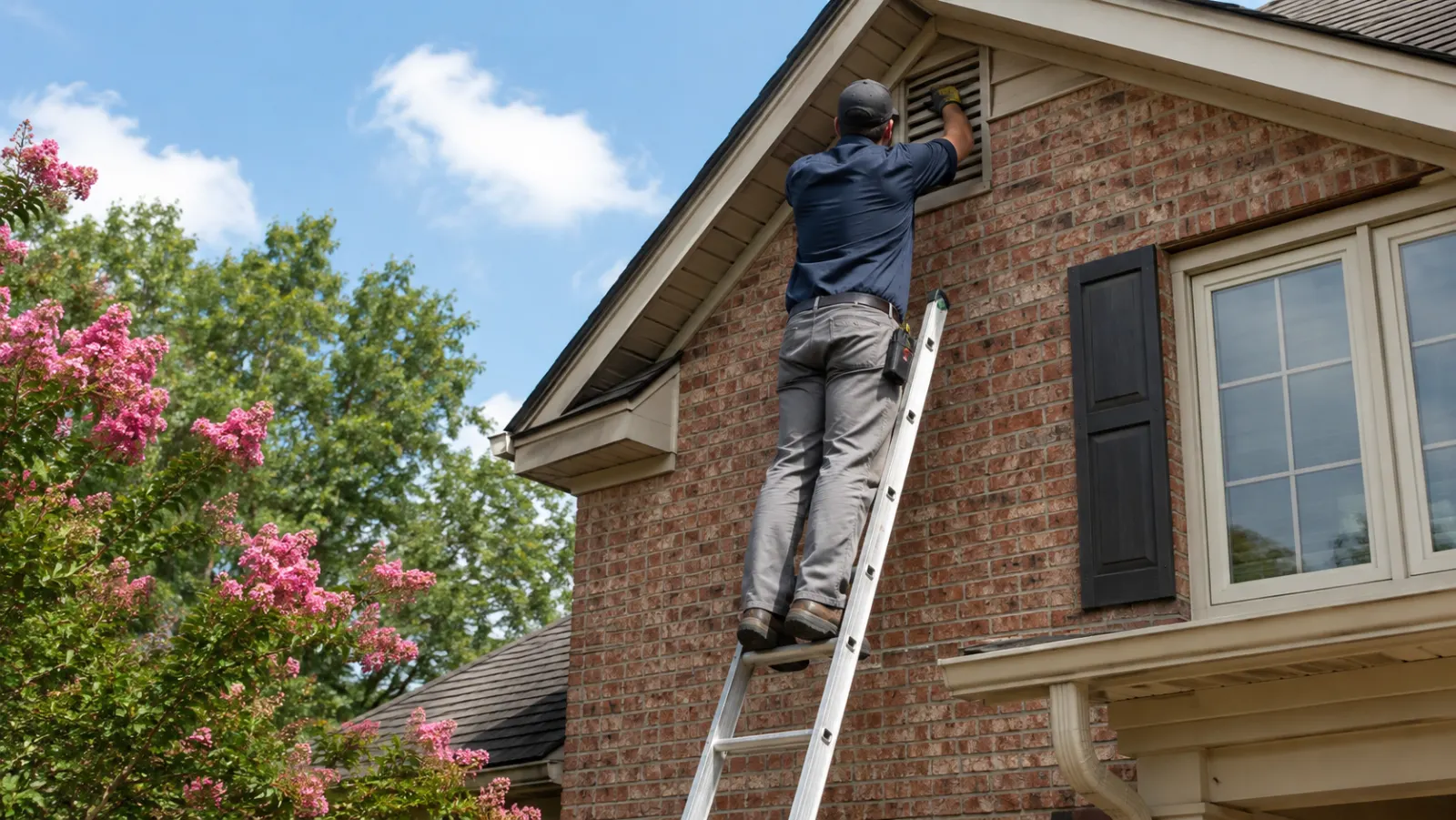
Every wildlife job in Columbia comes down to the same four steps: find the way in, get the animal out, seal it, clean up. This page lays out what a permitted operator does for raccoons, squirrels, bats, snakes, opossums and dead animals, what South Carolina law allows, and what it all costs in 2026, so the price on the call makes sense.
On this page
What a permitted wildlife operator actually does
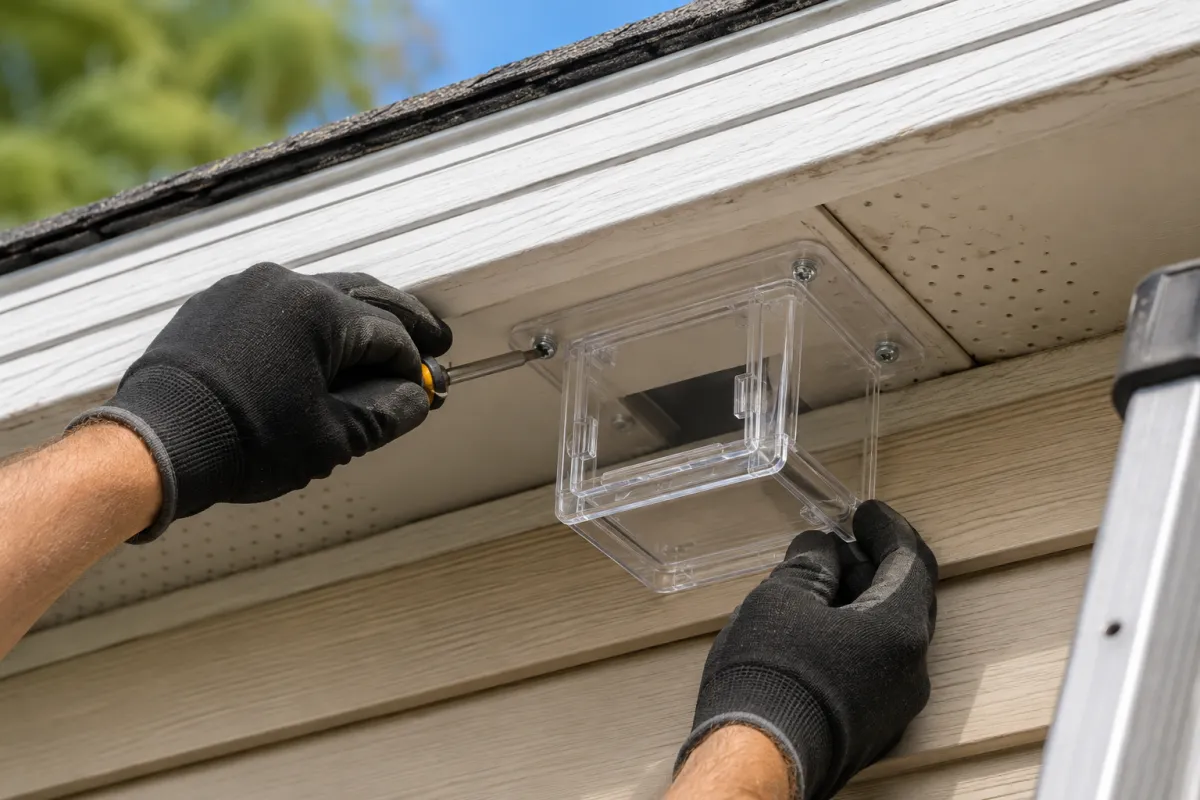
Wildlife removal is four jobs sold as one visit. The operator inspects the house to find how the animal gets in and whether there are young; removes the animal by trap, one-way door or by hand; seals the entry points with material the animal cannot get through; and, when you want it, cleans up the droppings and ruined insulation it left behind. A quote that covers only the second job is the reason a lot of Columbia homeowners call twice. If the animal over your ceiling right now is a raccoon, our guide to what to do first when a raccoon is in the attic walks through the same four steps from the homeowner's side. Scratching at sunrise rather than footsteps at midnight usually means squirrels, and how to tell squirrels are in the attic covers that case; everything we have written up for homeowners sits in the guides section.
The animals we connect you for
Raccoons
Heavy footsteps at night, torn soffit, latrine in the insulation. Spring means kits, and the method changes.
Squirrels
Scratching at dawn and dusk, a chewed hole in the fascia, and cables that are being gnawed as you read this.
Bats
Staining below a gable vent, a dusk exodus. Protected, excluded on SCDNR's spring and fall calendar.
Snakes
Copperheads in the pine straw, rat snakes in the crawl space. Identification first, removal second, mice third.
Opossums
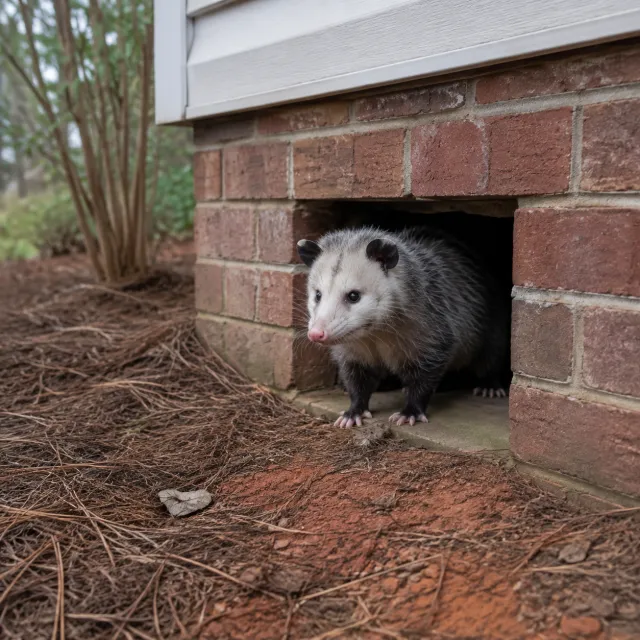
An opossum under the deck or in the crawl space is the least dramatic call we route. They do not dig, rarely chew and are almost never rabid; their body temperature runs too low for the virus to take hold easily. What they do is move in under a deck, into a crawl space with a broken vent or, memorably, into a garage, and hiss like a much bigger animal when a flashlight finds them. An operator traps or hand-removes the opossum, checks the pouch for young in spring and screens the vent or deck skirt so the next one keeps walking. Same South Carolina rule as everything else: released on site or humanely euthanized, no relocation.
Dead animal removal
Sometimes the animal solved itself, badly. A dead squirrel in a wall cavity or a raccoon that died in a ceiling makes itself known within a day or two, and the smell gets worse for most of a week before it fades. An operator follows the odor, sometimes with a small inspection cut, removes the carcass, treats the cavity and closes it. Then they find the hole the animal used, because there is always a hole.
South Carolina's rules, in plain words
- Paid trapping needs a permit. Anyone who charges a fee to remove nuisance wildlife must hold an SCDNR Wildlife Control Operator permit. SCDNR publishes the list; ask your operator which office issued theirs.
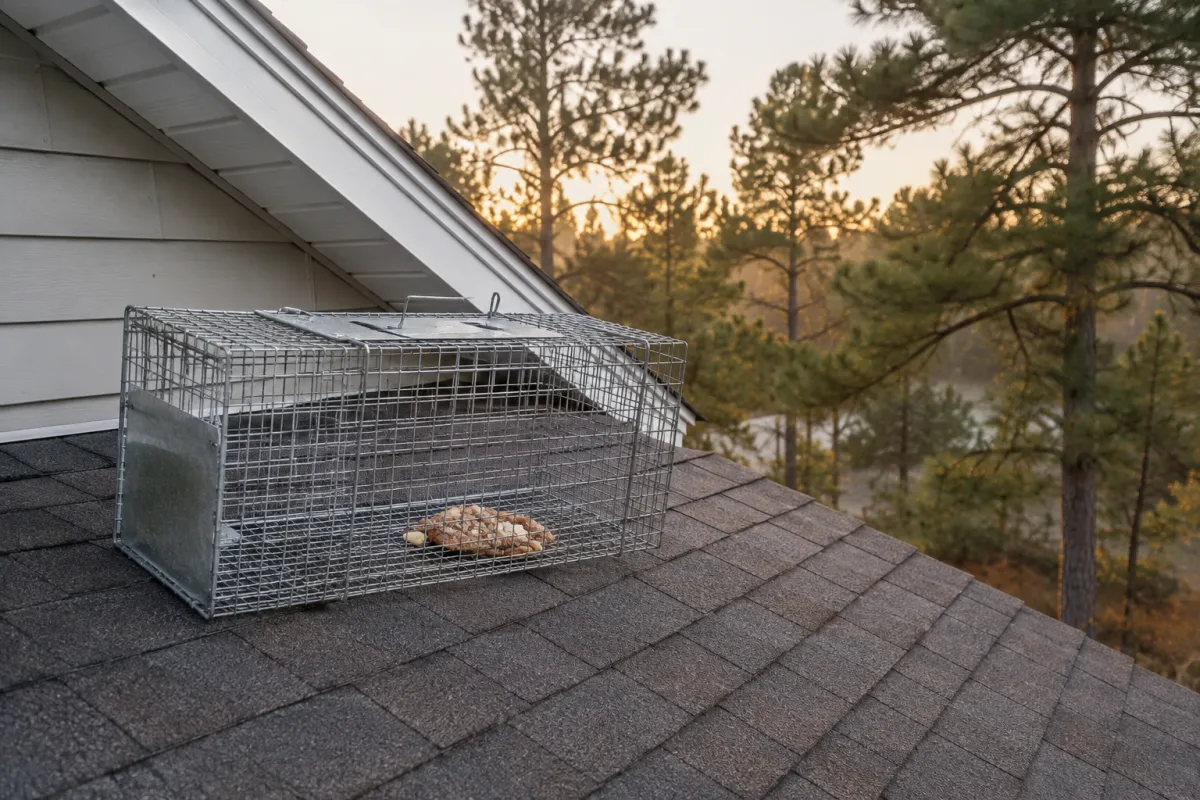
- Relocation is against state law. SCDNR's own words: routine relocation of wildlife is illegal, and no permitted operator may move a captured animal to another location. On-site release or humane euthanasia are the options.
- Homeowners have a 100-yard exemption. No depredation permit is needed to capture a furbearer or squirrel damaging property within 100 yards of your home. Beyond that, a free 30-day depredation permit comes from an SCDNR regional office.
- Bats are the exception to everything. Exclusion only, in March and April or August through October per SCDNR, and any bat found inside a home should go for rabies testing through the South Carolina Department of Public Health.
- Rabies is not theoretical here. SC DPH confirmed 101 rabid animals in 2025, mostly raccoons, skunks, foxes and bats. Keep dogs, cats and ferrets vaccinated as state law requires, and let the permitted operator do the handling.
2026 wildlife removal cost in Columbia
Angi's 2026 cost data is the most current national reference, and Columbia operators tend to price inside its ranges. The figures below are a guide, not a quote; the operator sets your price after seeing the entry point.
| Job | Typical range | What moves the price |
|---|---|---|
| Inspection | $100 to $300 | Often credited against the job |
| Typical wildlife removal job | $191 to $576 | Angi 2026; average $378 |
| Raccoon removal | $150 to $1,900 | Angi 2026; average $400; attic and kits push it up |
| Squirrel removal | $250 to $450 | Angi 2026; plus sealing and follow-up |
| Bat exclusion | $250 to $1,500 | Angi 2026; small group vs. large colony |
| Animals in the attic, with exclusion | $500 to $1,500 | Angi 2026; entry points, roof height |
| Dead animal removal | $150 to $400 | Search time, wall access |
| Attic cleanup and reinsulation | Quoted separately | By volume of contaminated material |
Sources: Angi and HomeAdvisor 2026 wildlife removal cost guides. Typical market ranges, not a quote. Your price is set by the local operator.
Bats are the line on that table with the widest spread, because the price follows the roofline rather than the animal; the guide to bat removal cost in Columbia, SC breaks that row into inspection, exclusion, colony size and guano cleanup so you can see which part of the number is yours.
Snakes are the cheapest line on the table and the one most often solved without a visit at all; the guide to a snake in the yard in Columbia, SC covers what to do first, how to spot a copperhead from a photo, and when the job really does need an operator.
If you want to see how a quote splits into removal, sealing and repair, and why the repair line is the one that grows while you wait, the guide to wildlife removal cost in Columbia, SC walks through each line with 2026 ranges.
Where the operators go
Columbia (Shandon, Rosewood, Forest Acres, the Northeast and downtown), Lexington, Irmo, West Columbia, Cayce, Blythewood, Chapin, Elgin, Hopkins and the rest of Richland and Lexington counties. Lake Murray's wooded lots and the old oak streets inside I-77 produce most of the attic work. Slightly outside? Call; operators draw their own maps.
How to get a Columbia wildlife removal quote
Call the number on this page, describe what you are hearing or seeing and where, and the operator gives you a price and the earliest visit they can offer. Columbia Wildlife Removal is a free referral service paid by the provider network when a call connects; the operator is an independent, SCDNR-permitted business, and you can book or not. There is no form, no callback queue and no obligation.
All services & cost: questions we hear on the phone
What does wildlife removal cost in Columbia, SC?
Angi's 2026 national data puts a typical wildlife removal job at $191 to $576 with an average of $378, an inspection at $100 to $300, and animals in an attic at $500 to $1,500 once trapping and sealing are included. Columbia operators generally price inside these ranges, and the phone quote is free.
Is wildlife removal the same as animal control?
No. Animal control in Richland and Lexington counties is the government service for domestic animals: stray dogs, cats, bite reports, and it does not come out for a raccoon in your attic. Wildlife removal is done by private operators holding an SCDNR Wildlife Control Operator permit, and it is paid work. Snakes and injured wildlife on public property are different again; SCDNR's regional offices can advise.
Do I need a permit to trap an animal on my own property?
SCDNR says a depredation permit is not required to capture a furbearer or squirrel causing damage within 100 yards of your home. Outside that distance, or out of season, you need a free depredation permit from an SCDNR regional office, valid for 30 days. In every case, relocation is against state law: release on site or humanely euthanize. That rule alone sends most people to a permitted operator.
Does the operator repair the damage and clean the attic?
Most Columbia operators do exclusion repairs, sealing entry points with metal, as part of the removal job, and many offer attic cleanup and reinsulation as a separately quoted service. Structural roof or siding repair and electrical work go to a roofer or electrician. Ask on the call; the operator will tell you what they handle.
Something died in my wall. Who do I call?
A wildlife control operator. Finding a dead animal is a smell-tracking job, sometimes with a small cut in the drywall, and it is quoted by the hour or as a flat fee, usually $150 to $400 in the Columbia area. The smell peaks within a few days and fades over two to three weeks; most people do not want to wait it out.