Wildlife removal guides for Columbia, SC homeowners
Practical, Columbia-specific guides for the moment you are standing under the noise deciding what to do next, not generic national advice. Written for Richland and Lexington county homes, with SCDNR rules and 2026 local cost ranges named in the text.
On this page
The guides live right now
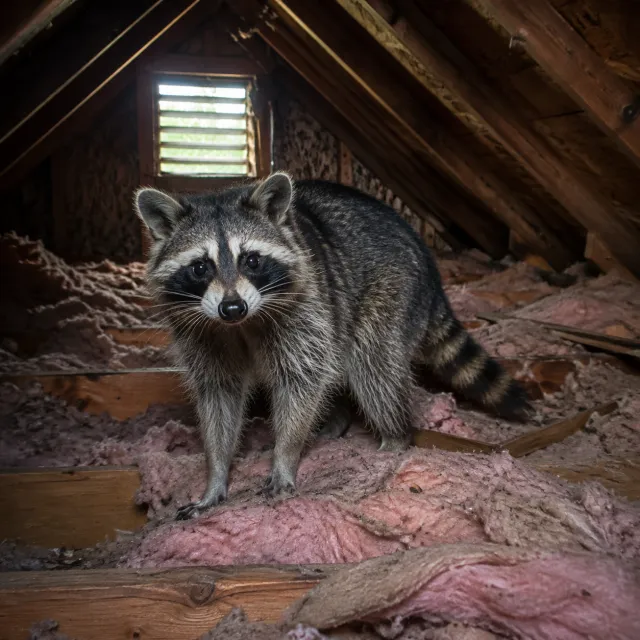
Raccoon in the attic: what to do first is for the homeowner who just heard heavy footsteps overhead after dark and does not yet know whether that is one adult passing through or a mother denning in for the spring. It covers what to check tonight, what is safe to try yourself, the five signs the job needs a permitted operator, and 2026 Columbia-area cost ranges, so the number on the phone quote makes sense before you dial it.
Bat removal cost in Columbia, SC: typical price ranges is for the homeowner who has found the staining under a gable vent and wants to know what the call is going to cost before making it. It sets out 2026 market ranges from Angi, This Old House and Today's Homeowner for inspection, exclusion by colony size and guano cleanup, explains why the SCDNR exclusion calendar decides your date as well as your price, and lists the four signs the job is past DIY.
Signs of squirrels in the attic: how to tell in Columbia, SC is for the homeowner hearing light, quick scratching around sunrise and again before dark. It explains the noise schedule that separates gray squirrels from raccoons, rats and flying squirrels, the chewed-hole clues you can check from the yard, the safe order for DIY eviction, and the five signs the job belongs to a permitted operator.
Snake in the yard in Columbia, SC: safe next steps is for the homeowner who just spotted a snake by the patio or in the pine straw and wants to know what to do in the next ten minutes. It covers how to tell a copperhead from a harmless rat snake or racer, why late summer brings baby copperheads, the yard fixes that take away food and cover, and the five signs the snake needs a permitted operator.
Wildlife removal cost in Columbia, SC: what to expect is for the homeowner who knows something is living in the house and wants a sense of the bill before calling. It sets out Angi's 2026 ranges for removal and for repairs after removal, explains what moves a Columbia quote up or down, lists the DIY groundwork that makes the quote accurate, and names the five signs the job needs a permitted operator.
How wildlife gets into a Columbia attic: the common entry points is for the homeowner who suspects something is getting in but has not found the hole. It maps the roof returns, soffit corners, gable and ridge vents, chimneys and pipe openings that raccoons, squirrels, rats and bats use, gives the gap sizes CDC, NC State Extension and SCDNR publish, lists the gaps that are safe to seal yourself, and names the five signs the job needs a permitted operator.
How these guides are written
Every guide here is built for Richland and Lexington county conditions specifically: the animals that actually show up in Columbia attics and crawl spaces, the SCDNR rules that apply in South Carolina and nowhere else, and cost figures pulled from current Angi and HomeAdvisor data rather than a word-count guess. Sources are named in the text, not buried in a footnote, and every price is a typical market range, never a quote, since only the operator who inspects your entry point can price the job.
If your situation is not covered yet, the full services and cost page walks through raccoons, squirrels, bats, snakes, opossums and dead animal removal in one place, or just call and describe what you are hearing.
Guides: questions we hear on the phone
Are these guides the same as the service pages?
No. The service pages (raccoons, squirrels, bats, snakes) cover what an operator does and what it costs. Guides go deeper on one specific situation, written for the moment you are standing in the room hearing the noise, deciding what to do in the next hour before anyone shows up.
Is this a substitute for calling a permitted operator?
No. A guide tells you what you are looking at and what you can safely do yourself tonight; a permitted SCDNR Wildlife Control Operator does the trapping, exclusion and sealing. The guides say so explicitly and point to the phone number when the job is past what a homeowner should handle alone.
Will more guides be added?
Yes. This hub grows as new Columbia-specific situations come up on the phone. Each guide stays narrow and practical rather than a generic national article, because a Columbia attic in July is not a Minnesota attic in January.