Bat removal cost in Columbia, SC: typical price ranges
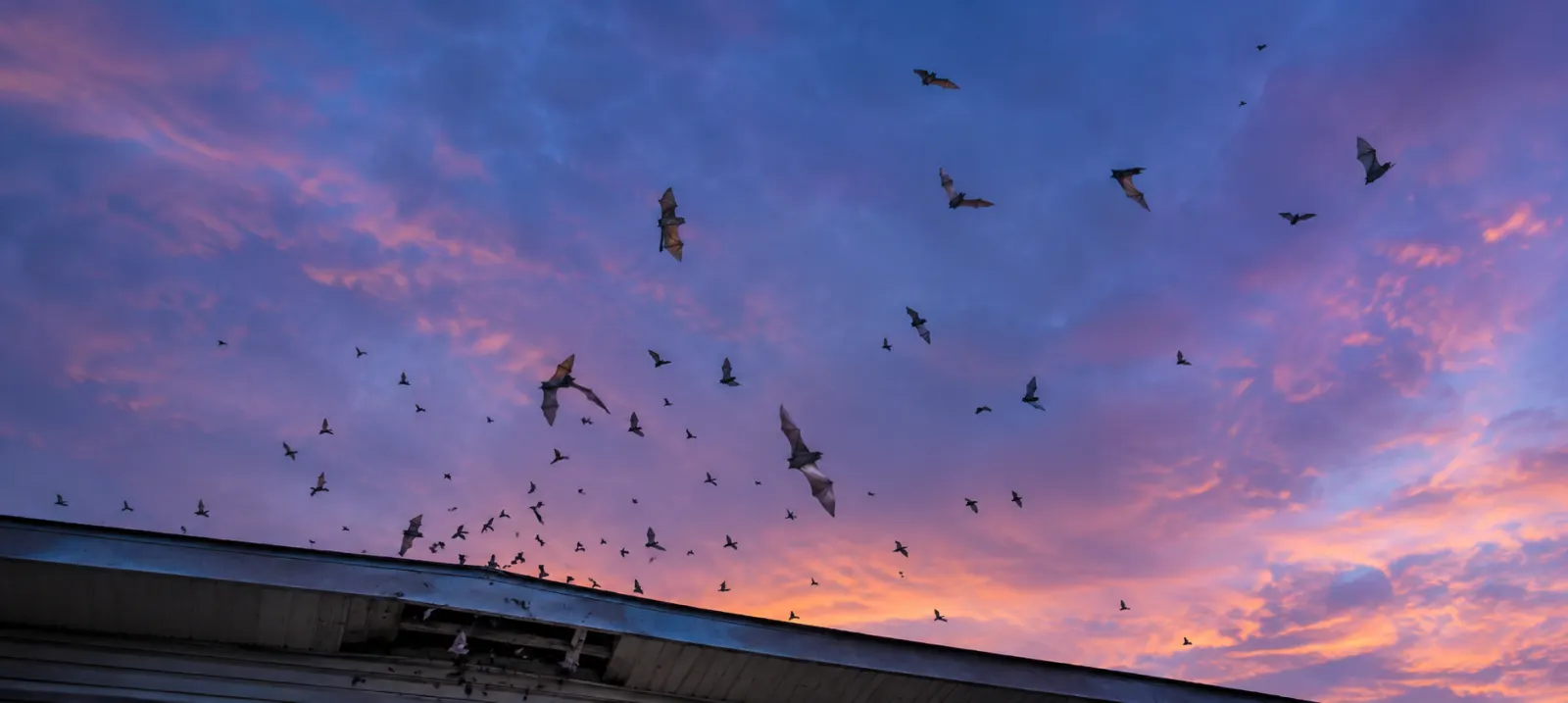
Most Columbia bat jobs come in between $400 and $1,500. The spread is wide because you are not paying for the bats, you are paying for the roofline: how many gaps, how high, how long the colony has been up there. Here is what sets your number, what you can do yourself, and where the job stops being yours.
On this page
What bat removal costs in Columbia, SC
Bat removal in Columbia typically costs $400 to $1,500 for the size of colony most Midlands homeowners have. Angi's 2026 cost data puts a colony of two to 50 bats, with multiple entry points sealed, in exactly that band, and Today's Homeowner's 2026 guide reports the same average, with jobs under 10 bats at $400 to $600. This Old House's 2026 guide runs lower on small work, $250 to $650, about what a tight brick ranch with one gable vent costs here. Nobody can quote you off a web page. A page can only tell you whether the number you hear on the phone is normal.
What a season of waiting actually buys you
Waiting on a bat colony in Columbia does not hold the problem still, it compounds it. Picture the attic over your bedroom next July. Under the roost the guano is no longer a scattering on a joist, it is a cone, and the insulation beneath it has been soaking urine since spring. That is the cheap part. CDC is blunt about the rest: the fungus behind histoplasmosis grows in association with large amounts of bat droppings, and the spores go airborne when the material is disturbed. Left alone it sits there quietly. The risk arrives the day you climb up with a shop vac and a bandana.
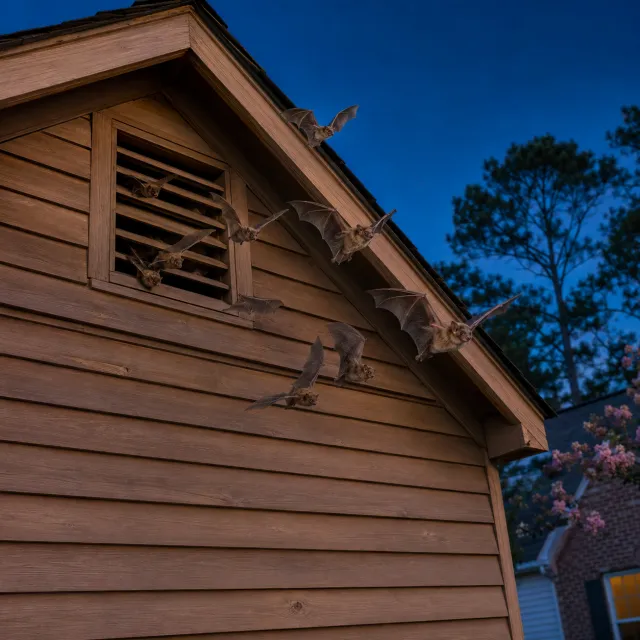
Then there is the night a bat comes down, usually at 2 a.m. with everyone asleep. SC DPH does not treat that as a shoo-it-out-the-window situation: a bat that may have had contact with people or pets should be contained and submitted for rabies testing, and bat bites can be too small to notice on a sleeping adult. The state lab confirmed 101 rabid animals in South Carolina in 2025. Most bats are not rabid. You just cannot know which one flew down your hallway. Put the call off from March to May, meanwhile, and the state closes the door on you until August.
Bat removal price ranges for a Columbia home in 2026
Bat pricing in Columbia breaks into four lines, and a quote covering only the first two is a quote for a repeat visit. Typical market ranges below, not a quote for your house.
| Line item | Typical range | Source and notes |
|---|---|---|
| Inspection and dusk count | $75 to $400 | This Old House 2026; often credited against the job |
| Small job, under 10 bats | $250 to $650 | This Old House 2026; Today's Homeowner puts under 10 bats at $400 to $600 |
| Colony of 2 to 50 bats, multiple exits sealed | $400 to $1,500 | Angi 2026; the band most Columbia attics fall into |
| Large colony, 50 to 200 bats | $2,000 to $8,000 | Angi 2026; years of roosting, many gaps, several visits |
| Guano cleanup and attic restoration | $500 to $5,000 | Today's Homeowner 2026; driven by volume and ruined insulation |
Typical market ranges from Angi, This Old House and Today's Homeowner 2026 cost data, not a quote. Your price is set by the provider after the dusk count and roof inspection.
What moves your Columbia price up or down
Bat exclusion is priced by the building, not by the animal, which is why two neighbors on the same street get different numbers.
- How many active exits. One gable vent is an afternoon. A ridge cap lifted along its whole run is a different job.
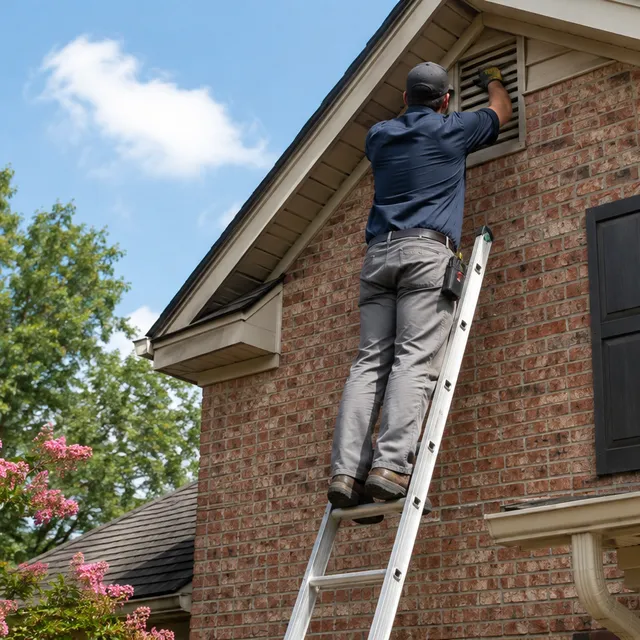
- Roof height and pitch. A single-story ranch off Devine Street prices lower than a two-story colonial that needs staging to reach the fascia.
- How long the colony has been there. The biggest lever: it decides if the job is exclusion alone or exclusion plus cleanup.
The SCDNR calendar decides when, and when decides what you pay
SCDNR sets South Carolina's exclusion windows at early spring, March and April, or fall, August through October. From May through mid-July mother bats are raising pups that cannot fly, and sealing the roofline then traps the young inside. No permitted operator here will do it, and you would not want the result in a South Carolina July. Fall is also the busy window in the Midlands, so booking in July buys you a date in August instead of whatever is left. SCDNR counts 15 bat species in the state; the ones in Columbia attics are usually Brazilian free-tailed bats, big brown bats and evening bats, all protected.
What you can genuinely do yourself, starting tonight
Homeowners can do more of the bat job than they expect, and the free parts pull money off the quote.
- Run your own dusk count. Stand outside 15 to 30 minutes after sunset, watch the roofline, count what comes out and from where. Two evenings of that turns a guess into an estimate.
- Photograph the staining. Bats leave a greasy brown rub mark and a dropping pile below the exit. Shoot from the yard with the gutter in frame for scale.
- Seal the inside, not the outside. Weatherstrip the attic hatch, sweep the bonus-room door, close the chimney damper. Safe in any season, and it keeps a bat out of your hallway while you wait for the window.
- Leave the guano alone until you have a respirator. Following CDC's logic: do not dry sweep it, do not vacuum it. Mist, bag, N95 at minimum.
- Know the bat-in-the-room drill. Close the interior doors, open one window, kill the lights, wait. That only applies if nobody was asleep in the room and no child or pet was near it. Otherwise contain it without touching it and call your doctor.
Four signs the bats in your attic are past DIY
Some bat situations are beyond self-treatment. These four are the honest line.
- A bat has been in the living space. That is a health call and a colony indicator at once, not a broom-and-a-towel evening.
- Your dusk count found more than a handful, or more than one exit. Multiple exits means one-way devices on all of them at once, because bats simply move to whichever gap is open.
- There is real guano depth up there. A scattering on a joist is one thing. A cone under the roost means cleanup and containment.
- It is May through mid-July, or the exit is above the second story. One is a legal timing problem; the other is where homeowners fall off Columbia rooflines.
The sensible next step: get it priced
If your house showed up in that list, a phone call is the cheapest move left. Call (833) 246-4378 and we connect you with a licensed local provider holding an SCDNR Wildlife Control Operator permit for the Columbia area. Tell them what your dusk count showed and whether a bat has been inside. You get a price, the earliest window they can offer, and no obligation to book. Same-day and 24/7 emergency services are subject to provider participation, location, technician availability, and demand. Availability is not guaranteed and may vary by market and appointment capacity.
Worth holding onto: bat exclusion has a clean ending. Nothing is exterminated and nothing needs to be. The colony gets shown the door, the door gets closed properly, and bats that used your ridge cap for six years go find a tree. Call in the same season you notice the staining and you will probably never see the cleanup line on that table. For the full method and rabies guidance, read the Columbia bat removal page; if the noise turns out to be footsteps instead, the raccoon in the attic guide covers that animal, and all services and costs lays out what South Carolina law allows.
Bat removal cost in Columbia: questions we hear on the phone
How much does bat removal cost in Columbia, SC?
Most Columbia bat jobs land between $400 and $1,500. Angi's 2026 cost data puts a colony of two to 50 bats with multiple entry points sealed at $400 to $1,500, and Today's Homeowner's 2026 guide gives the same national average with fewer than 10 bats at $400 to $600. A big, long-established colony is a different bill: Angi puts 50 to 200 bats at $2,000 to $8,000. Guano cleanup is priced on top. These are typical market ranges, not a quote, and the phone quote itself is free.
Why can bats not be removed in June?
Because the pups cannot fly yet. SCDNR's guidance is to exclude bats in early spring (March and April) or in fall (August through October), and not from May through mid-July, when mother bats have flightless young in the roost. Exclusion in that window seals the pups inside to die in the attic, which is both inhumane and a smell you will be living with. A permitted operator will inspect in June, quote the work, seal the gaps between your attic and your living space, and schedule the exclusion for August.
Is one bat in the house actually a big deal?
One bat in the living space is the one bat situation worth taking seriously, for two reasons. First, SC DPH treats a bat that may have had contact with people or pets as a testing matter rather than a shoo-it-out-the-window matter, and the state lab confirmed 101 rabid animals in South Carolina in 2025. Bat bites can be small enough to miss, so anyone who was asleep in that room should call a doctor the same day. Second, a bat in the hallway usually means a roost above the ceiling, not a lost traveller.
Do ultrasonic bat repellents work?
No, and the money is better spent on a dusk count. Bats are not chewing their way in, they are using gaps that already exist, so nothing you plug in changes the math. The method SCDNR describes is exclusion: one-way devices on every active exit, then sealing every remaining gap of about 3/8 of an inch or more. A device that lets you skip that step would be the only wildlife product in history that did.