Signs of squirrels in the attic: how to tell in Columbia, SC
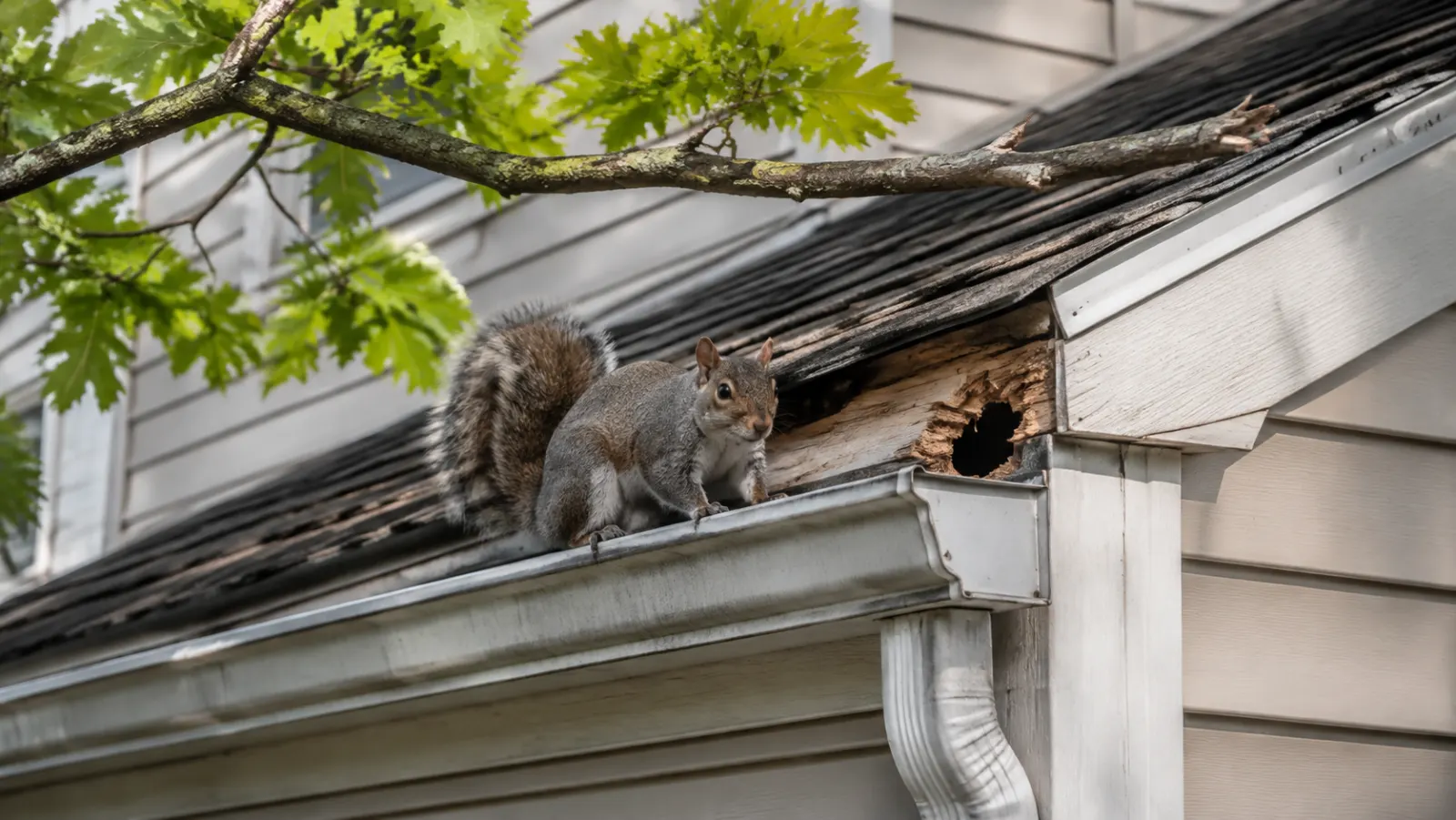
If the scratching over your ceiling starts around sunrise, goes quiet by lunch and picks up again before dark, you almost certainly have squirrels. Raccoons and rats work the night shift. Squirrels keep office hours. Here is how to confirm it, what you can fix yourself, and where the job stops being yours.
On this page
The clock is your best clue: squirrels are loud at dawn and late afternoon
Squirrels are the one common attic animal in Columbia that works daylight hours. Gray squirrels leave the nest at first light to feed and come back in the late afternoon, so the noise bunches up in the early morning and again an hour or two before sunset. It sounds light and quick, scampering and scratching, and now and then an acorn rolling across the joists. Racket at 2 a.m. points elsewhere.
One twist: the southern flying squirrel, found across South Carolina, is active at night and often moves in with a few friends in late fall. So keep a three-day note on your phone of the time, spot and sound. That log beats any guess, including mine.
Squirrel signs you can check from the yard and the attic hatch
The outside of the house usually confirms squirrels before you open the attic. Walk the roofline in daylight with your phone zoomed in:
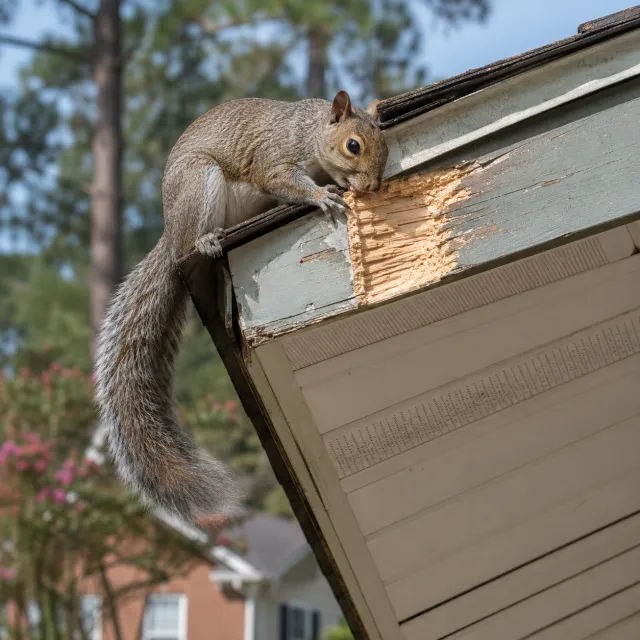
- A rounded, chewed hole at a roof corner, in the fascia or where the gutter meets the soffit, often no bigger than a tennis ball.
- Fresh pale wood and tooth marks around the edge. Squirrels gnaw their way in; raccoons pull panels outward.
- A squirrel commute: an oak or pecan limb over the roof and the same animal running the gutter at the same hour every morning.
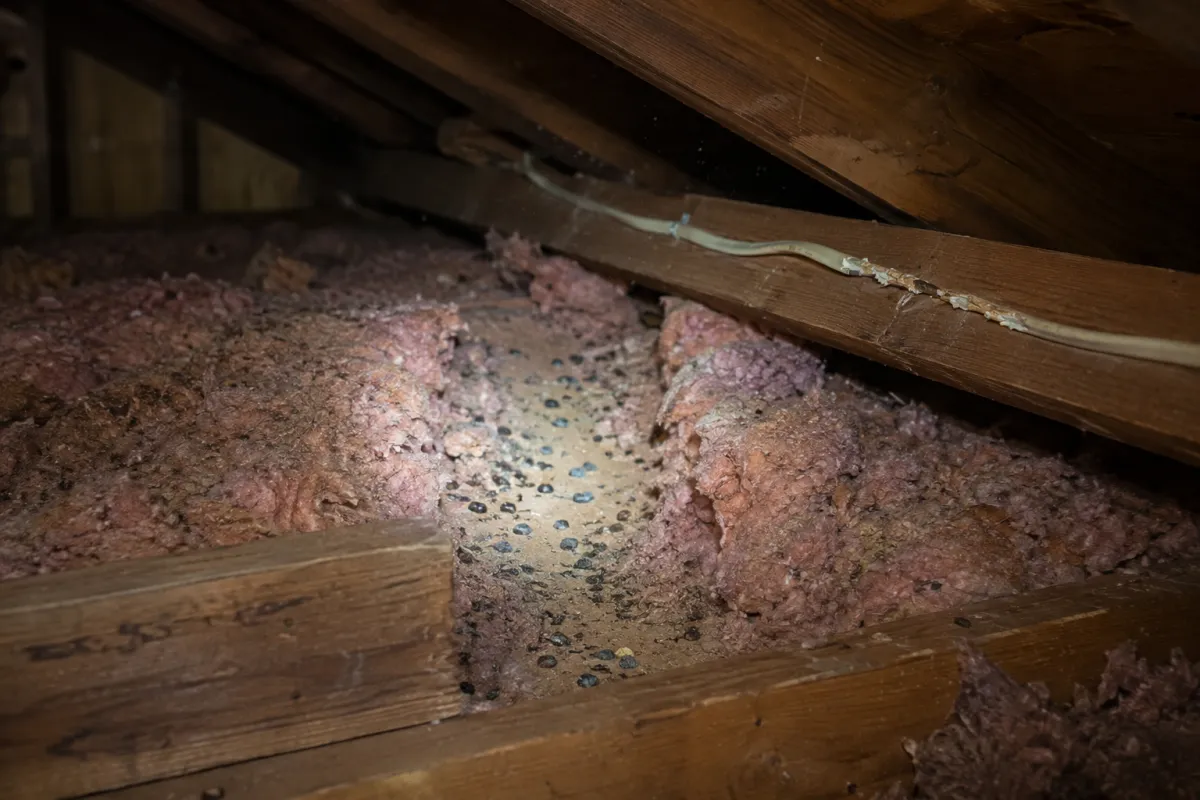
From the attic hatch, with a flashlight and without crawling in, squirrel signs are a loose ball of dragged insulation near the eaves, droppings, gnawed cable and daylight at the fascia. The Alabama Cooperative Extension System names nut caches inside buildings as a clear giveaway, and in a Midlands attic that usually means pecan shells.
Squirrel, raccoon, rat or flying squirrel? A quick comparison
The attic animal in a Columbia home can usually be named from two facts: when you hear it, and what the entry looks like.
| Animal | When you hear it | What it sounds like | What you find outside |
|---|---|---|---|
| Gray squirrel | Early morning and late afternoon | Light, fast scampering, rolling nuts | Chewed round hole, fresh wood at a roof corner |
| Southern flying squirrel | After dark, often fall and winter | Soft scurrying, several animals at once | Small gaps at vents and eaves, easy to miss |
| Raccoon | After dark and again before dawn | Heavy, slow footsteps | Soffit or vent bent outward, not chewed |
| Rats | Through the night | Scratching and gnawing along the attic floor and inside walls | Dark rub marks along runways, small droppings |
If your notes match the top row, you have gray squirrels and the rest of this page is for you. If it is heavy walking after dark, read our guide to what to do when a raccoon is in the attic instead, because a raccoon changes almost everything about what you should try.
What squirrels in the attic do if you give them a season
Left alone, squirrels in the attic turn into a litter, then chewed wiring, then a second hole, in roughly that order. Picture a Rosewood bungalow in late winter, and a female who slipped in through the gable vent raising her young in your insulation, right above the kids' room. Alabama Extension notes gray squirrels breed twice a year with two to four young a litter, so the attic you meant to deal with after the holidays has a family by spring, and maybe another by August.
Now the teeth. A squirrel's incisors never stop growing, so it gnaws on anything with the right give, and the plastic jacket on attic cable is exactly that. You go to sleep with the bedroom fan humming on a circuit that runs past the nest, and somewhere above you a young squirrel works a stretch of copper bare, a few inches from dry insulation. You will not hear that part. Nobody does.
The obvious fix can make it worse. Stuff the hole while young are inside and the mother chews a new one through your fascia to reach them. Seal a squirrel in and it dies in a wall cavity, and a Columbia August bakes that smell through the drywall for weeks. None of this is rare.
What you can safely do yourself this week
A homeowner can confirm squirrels, cut off their access and evict a lone adult, as long as the steps go in this order:
- Rule out babies first. High, thin squeaking from one spot means a nest. Alabama Extension says young stay in the nest 10 to 12 weeks before weaning, and locking the adults out during that window kills the litter inside your ceiling. If you hear it, stop here.
- Trim the highway. The same Extension guidance is to keep limbs at least 8 feet from the building.
- Run the newspaper test. After the morning rush, loosely stuff newspaper into the hole. If it is pushed out by the next day, the hole is active.
- Look at the wiring from the hatch. Look, do not touch. Bare copper means an electrician comes before anything else.
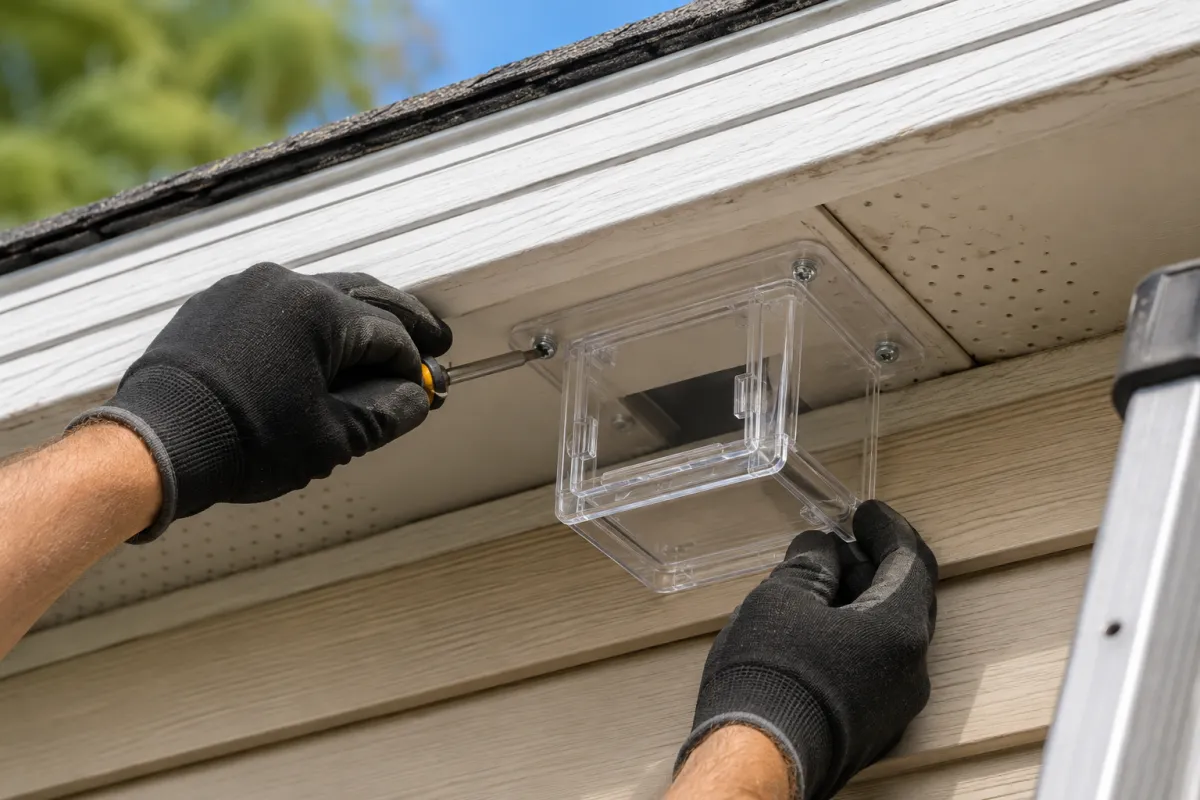
- Evict with a one-way door, then seal. With no young inside, a one-way door over the main hole lets squirrels out and not back in. Install it in the morning after they leave, never at night. After several quiet days, seal with galvanized hardware cloth or sheet metal screwed into framing. Spray foam is a chew toy.
On the legal side, SCDNR says a homeowner does not need a depredation permit to capture squirrels causing damage within 100 yards of the home. What South Carolina law does not allow is routine relocation, so the squirrel you trap cannot take a ride out to the Congaree and a fresh start. Our squirrel removal page for Columbia shows how a permitted operator does these same steps at roof height.
When DIY is not enough
Squirrels in the attic are past DIY the moment any one of these is true:
- You hear squeaking young, or you cannot rule out a nest.
- You find chewed or bare wiring anywhere in the attic.
- There is more than one active hole, or the entry is on a second-story roofline you would reach from a ladder on a slope.
- A dead-animal smell is coming through a wall or ceiling.
- You sealed a hole and a new one showed up within the week.
If one of those fits your house, the sensible next step is a phone call, not a taller ladder. Call (833) 246-4378 and we connect you with a licensed local provider who holds a South Carolina wildlife control permit. Say when you hear the noise and where the hole is, and you get a price and the earliest window on the call, no obligation. Same-day and 24/7 emergency services are subject to provider participation, location, technician availability, and demand. Availability is not guaranteed and may vary by market and appointment capacity.
What squirrel removal typically costs around Columbia
Squirrel removal in the Columbia area usually lands between $250 and $450 for a straightforward job, based on Angi's 2026 cost data, with one-way doors, sealing and a follow-up visit pushing an attic job higher. Chewed wiring and ruined insulation are priced on their own. These are typical market ranges, not a quote; the provider sets your price after seeing the roofline. The full job-by-job breakdown sits on our Columbia wildlife services and cost page.
The good news about squirrels
Squirrels are one of the most fixable attic problems a Columbia house can have. The entry is almost always visible from the yard, and once holes are closed with metal and limbs cut back, most homes stay quiet. Catch it at the scratching stage and you are looking at a weekend and some hardware cloth, not a new ceiling. More situations are covered in our Columbia homeowner guides.
Squirrels in the attic: questions we hear on the phone
What time of day do squirrels make noise in the attic?
Gray squirrels make most of their attic noise at first light and again in the late afternoon, because they are daytime animals that leave to feed and come back before dark. Night noise in a Columbia attic usually means a raccoon, rats, or the southern flying squirrel, which is active after dark and often moves into attics in late fall.
Can squirrels in the attic cause a fire?
Squirrels can create a real fire risk by chewing the plastic jacket off attic wiring, since their front teeth never stop growing and they gnaw to keep them short. Bare copper next to dry insulation is not something to leave for later. If you see chewed or exposed wire, have an electrician check the circuit before anyone seals holes or sets doors.
Can I trap a squirrel myself in South Carolina?
Yes, within limits. SCDNR says a homeowner does not need a depredation permit to capture squirrels causing damage within 100 yards of the home. State law bars routine relocation of wildlife, though, so a trapped squirrel cannot be driven to a park and released. For most attics, a one-way door plus proper sealing is the better tool than a cage trap.
How do I know the squirrels are gone?
You know squirrels are gone when the dawn and dusk noise stops for several days in a row and a loose wad of newspaper stuffed in the old entry stays put. Only then should the hole be sealed with hardware cloth or sheet metal. If a new chewed opening appears nearby within a week, something is still inside and wants back in.