Wildlife removal cost in Columbia, SC: what to expect
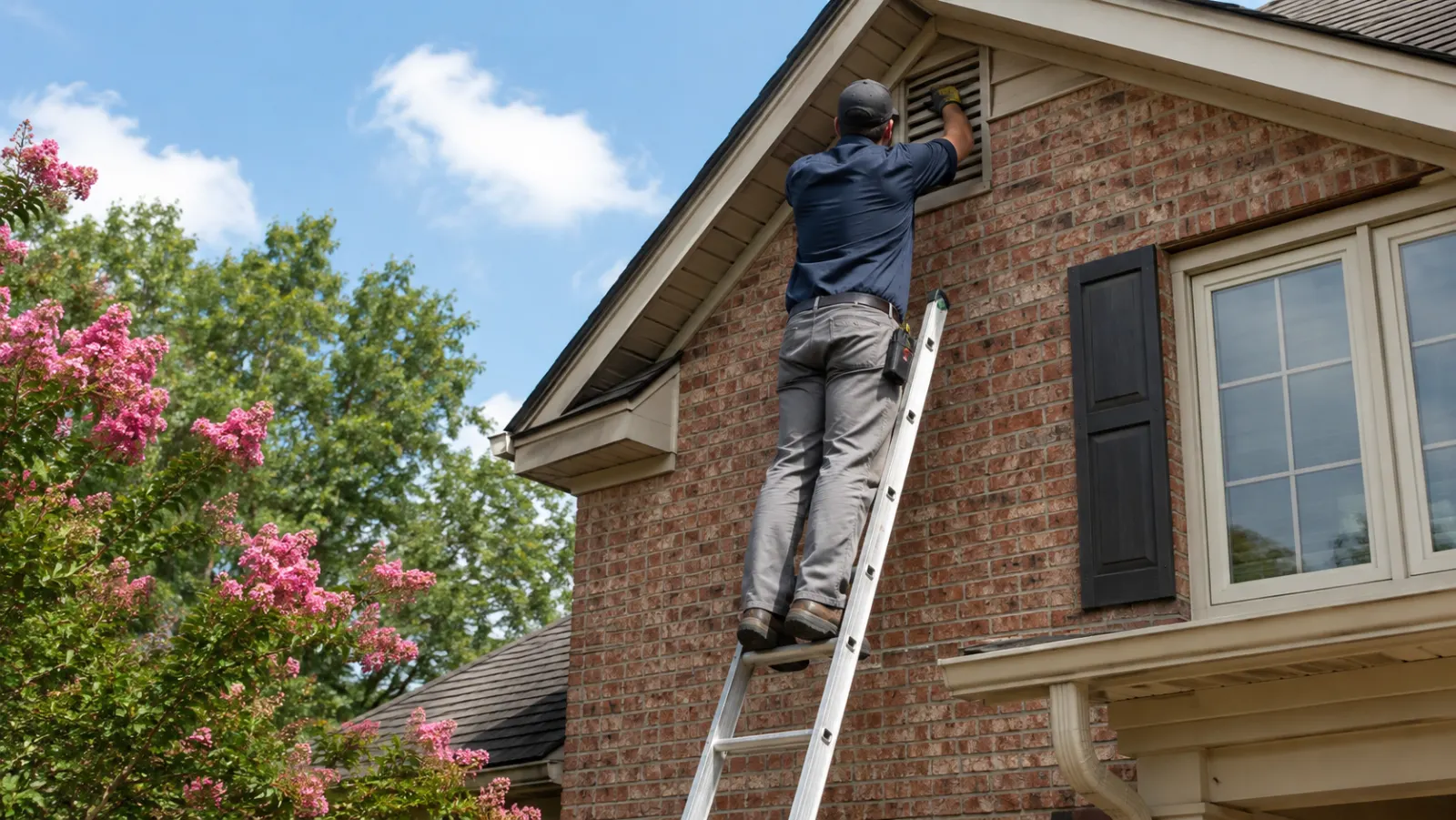
Most wildlife removal jobs in Columbia cost a few hundred dollars, and the ones that cost thousands almost always got that way by waiting. The animal is the cheap part. What you pay for is the hole it used, the time it spent inside, and whatever it chewed, soiled or ruined while you were hoping it would leave on its own.
On this page
What wildlife removal costs in Columbia, SC
Wildlife removal in Columbia typically costs $198 to $635 for the removal itself, which is the national range in the current version of Angi's 2026 cost guide. Angi does not publish a Columbia figure. Its nearest Southeast city, Atlanta, averages $689, so treat the national band as a sensible starting point rather than a ceiling. Raccoon removal on its own averages $300 to $450 in the same data. The line that turns a $400 afternoon into a four-figure invoice is repair: Angi prices drywall and insulation work after removal at $300 to $6,000. That gap is the whole story of this page.
What a few months of waiting does to the bill
Waiting on a wildlife problem in a Midlands house does not freeze the price, it converts a removal job into a repair job. Picture it. It is 2 a.m. in Forest Acres, and the ceiling over your bed is doing something ceilings should not do: a slow, heavy walk, a pause, then a drag across the joists. You decide it will leave. It does not. By spring it is a mother raccoon with kits, and she has chosen one corner of your attic insulation as her bathroom.
CDC's guidance on raccoon latrines is the part nobody reads until it matters. Roundworm eggs in raccoon droppings become infectious within two to four weeks and can stay viable for years, which is why CDC tells anyone cleaning a latrine to wear gloves, mist the area so dust does not rise, and use an N95 respirator in confined spaces. Your attic is a confined space. The trapping price barely moves. The cleanup line grows every week.
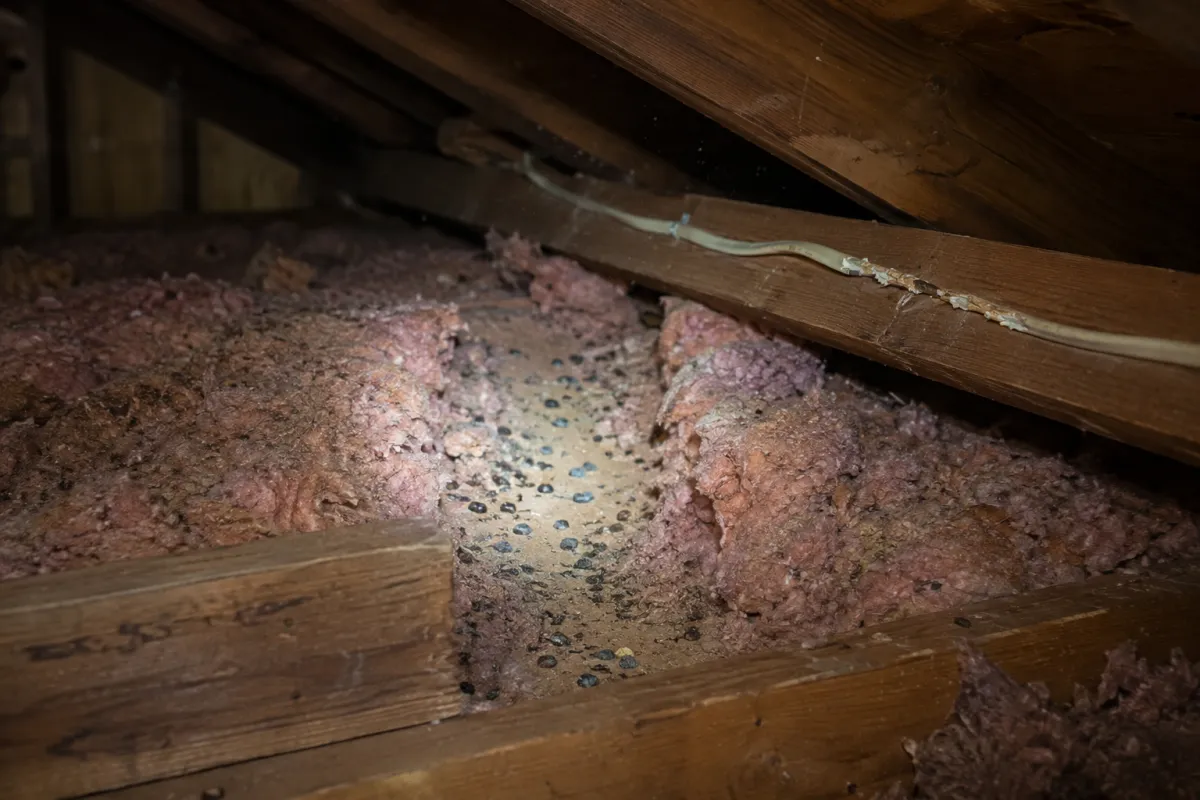
Squirrels run up the bill with their teeth. They are rodents, their front teeth never stop growing, and the cables stapled across your attic joists are right there. A gnawed jacket over bare copper, buried in dry insulation under a July roof, is not something you want to find with a flashlight. And the shortcut some people reach for, poison, produces the worst version of all: an animal that dies inside a wall cavity, where the smell decides the price of the next visit.
Wildlife removal price ranges for a Columbia home in 2026
A Columbia wildlife removal quote usually splits into removal, sealing and repair, and knowing which line you are looking at is how you tell a fair number from a padded one. Typical market ranges below, not a quote.
| Line item | Typical range | Source and notes |
|---|---|---|
| Professional removal, typical job | $198 to $635 | Angi 2026, national; access and severity decide where you land |
| Raccoon removal | $300 to $450 average | Angi 2026; an attic den or a mother with kits pushes it up |
| Bat exclusion, colony of 2 to 50 | $400 to $1,500 | Angi 2026; multiple exits sealed |
| Repairs after removal | $300 to $6,000 | Angi 2026; drywall and insulation, the line that grows while you wait |
Typical market ranges from Angi's 2026 cost data, not a quote. Angi revised its national band during 2026, so older pages may show slightly lower numbers. Your price is set by the provider after they see the entry point.
Bats are the outlier because the price follows the roofline, not the animal, and our bat removal cost guide for Columbia breaks that row into inspection, colony size and guano cleanup.
What moves your Columbia price up or down
Wildlife removal is priced by the house and the situation, which is why two neighbors on the same Shandon street can get quotes $500 apart.
- Where the animal is. Angi names nesting location as a main price driver: under the deck is cheaper than a second-story soffit.
- How many follow-up visits. Traps get checked, one-way doors get pulled, holes get re-inspected. Each trip is on the bill.
- How long it has been going on. The single biggest lever, because it decides whether cleanup and repair show up on the quote at all.
What you can do yourself before anyone quotes you
Homeowners can do most of the detective work themselves, and every bit of it makes the phone quote faster and more accurate.
- Find the hole from the yard. Walk the roofline at midday with binoculars. Look for a soffit panel bent outward, a chewed corner on a gable vent, a gap where the gutter meets the fascia.
- Log the noise for two nights. Heavy walking after dark usually means a raccoon. Quick scratching around sunrise and again before dusk usually means squirrels. Write down the times.
- Take away the buffet. Bungee the trash lids, bring pet food in at night, and move the bird feeder away from the house for a few weeks.
- Trim the ladder. Branches touching the roof are a highway. Alabama Extension suggests keeping limbs about 8 feet back from the roofline to discourage squirrels.
- Do not seal a hole you have not proven empty. Close it with an animal inside and it will either chew a new exit or die in there. Both cost more than waiting two days.
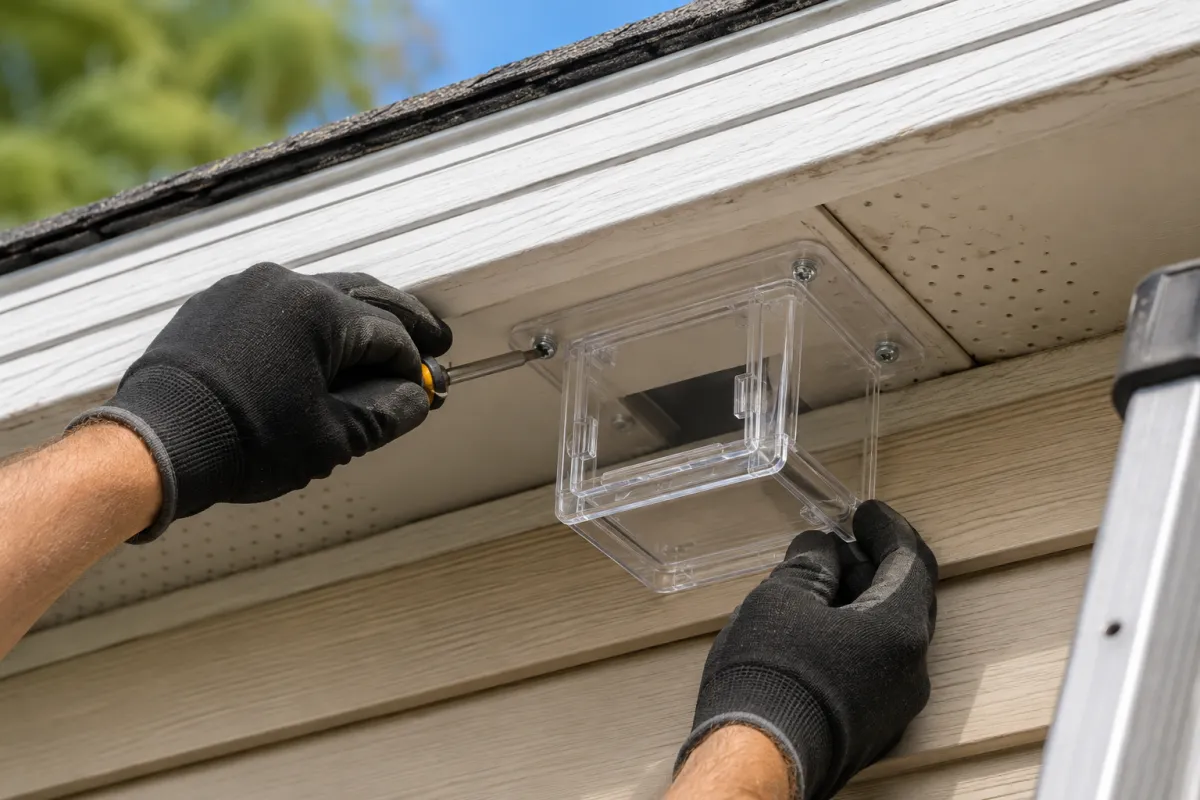
One legal note before you buy a cage trap: relocation is illegal in South Carolina under SCDNR rules, so a raccoon you catch has to be released on your own property or euthanized. That is usually where Columbia homeowners put the trap back on the shelf.
When DIY is not enough: five signs your case needs a pro
Some wildlife situations are past self-treatment, and these five are the honest line.
- You hear crying or chittering in spring. That is babies, and pulling the mother out without them leaves you with the problem the smell creates.
- An animal got into the living space, or someone was bitten or scratched. Call your doctor or vet the same day, then call for removal.
- You found a latrine or soaked insulation. That is a cleanup job with a respirator, not a shop vac and a Saturday.
- The entry point is above the first story. Rooflines are where homeowners get hurt, and a ladder on a Midlands pitch in August is no fun anyway.
- It came back after you sealed it, or you smell something dead. A second entry or an animal in the wall both need someone who can find them.
The sensible next step: get your number
If your house showed up in that list, a phone call is the cheapest move you have left. Call (833) 246-4378 and we connect you with a licensed local provider who holds an SCDNR Wildlife Control Operator permit for the Columbia area. Tell them what you hear and when. You get a price, the earliest window they can offer, and no obligation to book. Same-day and 24/7 emergency services are subject to provider participation, location, technician availability, and demand. Availability is not guaranteed and may vary by market and appointment capacity.
Here is the good news, and it is real: most Columbia wildlife problems end cleanly. The animal leaves, the hole gets closed with something it cannot open, and the attic goes quiet. Call in the same season you first hear it and the repair line on that table usually never appears. For the animal-by-animal detail, read the Columbia raccoon removal page or the squirrel removal page, and all services and costs covers what South Carolina law allows.
Wildlife removal cost in Columbia: questions we hear on the phone
How much does wildlife removal cost in Columbia, SC?
Most Columbia wildlife removal jobs land in the few-hundred-dollar range. Angi's 2026 cost data puts professional removal at $198 to $635 nationally and raccoon removal at an average of $300 to $450. Repairs after removal, such as drywall and insulation, run $300 to $6,000 in the same data. These are typical market ranges, not a quote, and the phone quote itself is free.
Why is my quote higher than the online average?
A higher quote usually includes work the average leaves out: sealing every entry point, follow-up visits, handling babies, or cleaning a latrine. Ask the provider to split the quote into removal, exclusion and cleanup. If each line makes sense for your house, the number is probably fair. If exclusion is missing entirely, the cheap quote is the expensive one.
Can I save money by trapping the animal myself?
Sometimes, but less than you think. SCDNR does not allow relocation in South Carolina, so a trapped raccoon must be released on your property or euthanized, and the hole it used is still open. Trapping without exclusion usually means a new animal in the same spot within a season. The free DIY work that actually saves money is finding the hole and logging the noise before you call.
Why do repairs cost more than the removal?
Because removal is one visit and damage accumulates for months. Angi's 2026 data puts removal at $198 to $635 but repairs after removal at $300 to $6,000, driven by soiled insulation, chewed wiring and damaged drywall. CDC notes that raccoon roundworm eggs in latrines stay viable for years, so contaminated insulation has to come out. Early calls keep that second line small.