How wildlife gets into a Columbia attic: the common entry points
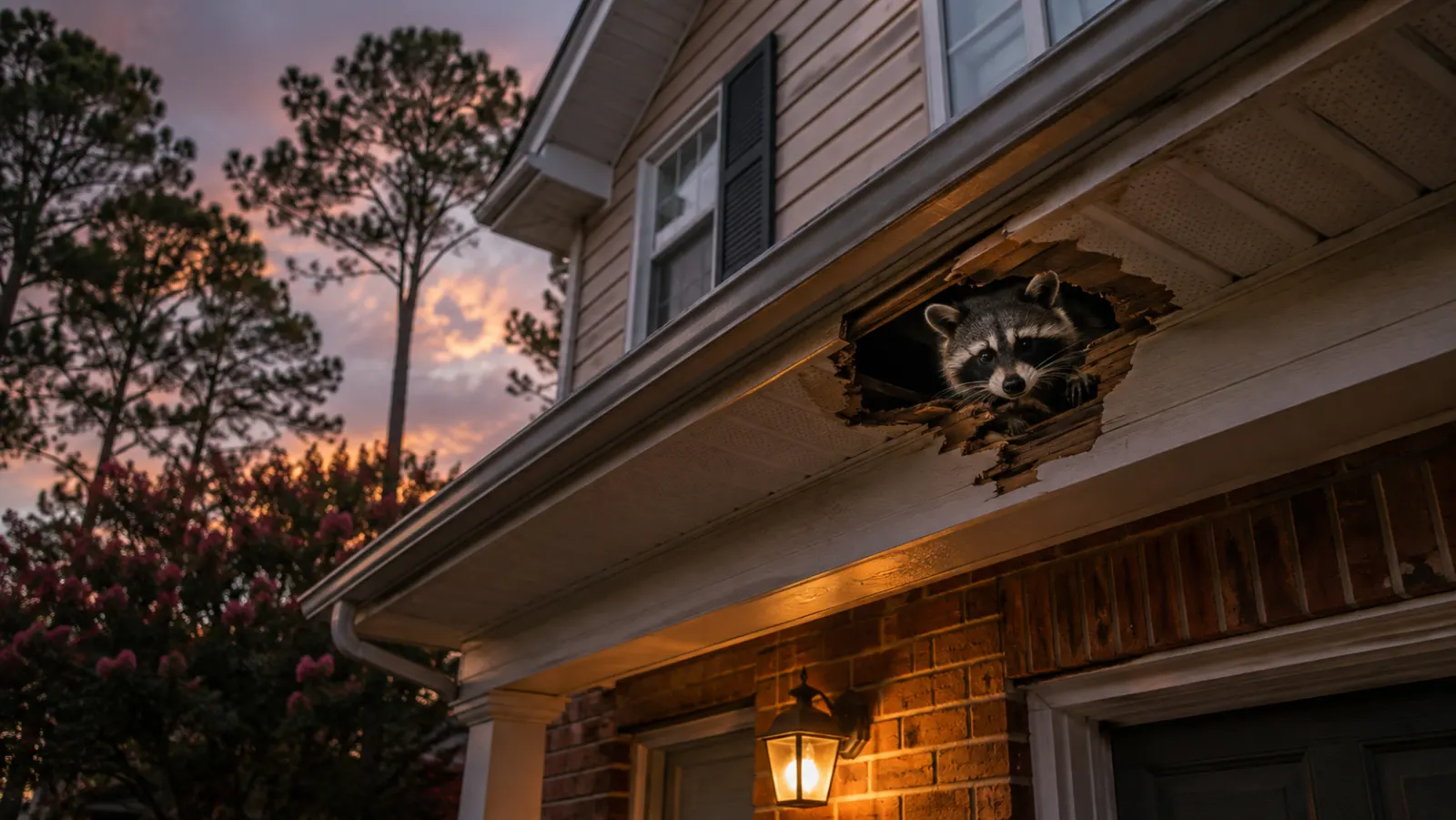
Wildlife gets into a Columbia attic through a gap at the roofline, not some mystery tunnel. Squirrels and rats chew those gaps wider, raccoons pull them open, and bats move into whatever the others left behind.
On this page
Where do animals get into a Columbia attic?
Animals get into a Columbia attic at the roofline, through gaps that either came with the house or opened up as it aged. Alabama Extension tells homeowners to check damaged siding, soffits, fascia boards and ridge vents first. SCDNR adds the chimney for raccoons, which it says den in attics or chimneys and, in extreme cases, tear off shingles or fascia boards to get in. Nothing about it is exotic. It is a vinyl soffit corner that sagged, a gable vent screen that rusted through, a flue nobody ever capped.
Here is the part most people miss. The animal that opens the hole is often not the one that ends up living behind it. SCDNR's bat guidance notes that bats cannot make holes at all, so they use existing crevices, often ones squirrels, black rats or raccoons created. One chewed corner can host three different tenants over a couple of years.
What one open gap turns into by next spring
An open gap at the roofline does not stay a gap, it becomes a den. Picture a warm night in late April under the pines in Forest Acres. The corner of fascia you noticed last fall, the dark slot behind the gutter, is not a slot anymore. A raccoon has pulled the board back with her hands, and above your guest room there are now kits. SCDNR puts a South Carolina litter at three to five, born in April or May. You hear it first as a thin chittering in the ceiling after dark. By June you smell it too, because she has picked one corner of your insulation as a latrine, and SCDNR lists raccoon roundworm among the diseases raccoons spread.
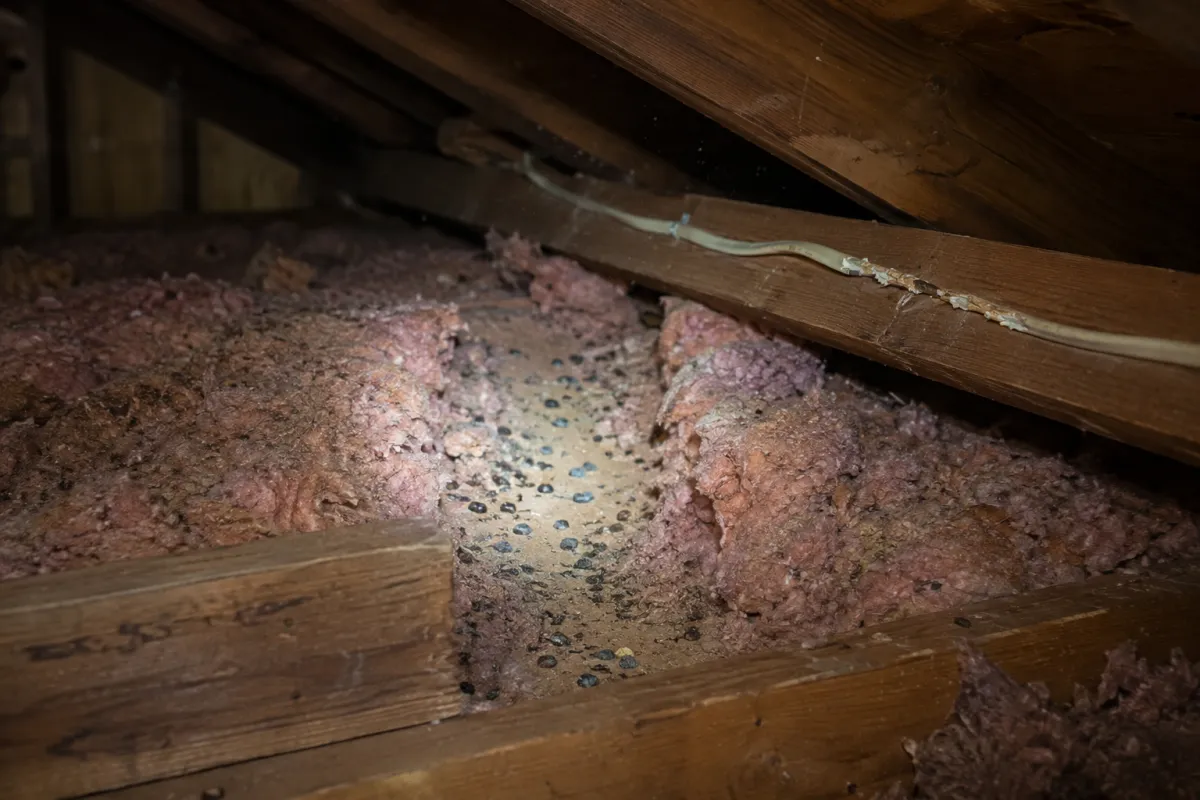
Now the other end of the attic. A roof rat, the animal SCDNR calls a black rat, runs in along the top plate at 3 a.m. and settles down to gnaw, because rodent teeth never stop growing. The cable stapled across the joists is the right height and the right hardness, buried in dry insulation under a roof that bakes all summer in a city that calls itself Famously Hot. You are asleep in the room underneath it. And the hole all of them widened? By August it can be a bat door. None of this takes bad luck. It takes an opening and one season.
The common entry points, and who uses each one
Columbia attic entries come down to a short list of spots, and each one tends to draw a different animal. This is what to look for from the yard.
| Entry point | Who uses it | What to look for |
|---|---|---|
| Roof returns and soffit corners | Squirrels, rats, raccoons | Where a lower roof meets a wall or two roof sections join: a sagging or chewed corner, a dark gap |
| Fascia behind the gutter | Squirrels, raccoons | Pale fresh wood, a chewed notch, or a board pulled outward |
| Gable vents | Squirrels, bats, rats | Torn or rusted screen, bent louvers, brown rub marks below the vent |
| Ridge vents and roof vents | Squirrels, rats | Chewed plastic covers, a lifted ridge cap |
| Chimney | Raccoons | A flue with no cap on it |
| Pipe, cable and AC line openings | Rats, mice | Gaps where lines pass through the wall or roof |
| Eaves, shutters, chimney-to-wall gaps | Bats | Greasy brown rub marks at a crack, droppings piled below |
| Overhanging branches | Anything that climbs | Limbs closer than 8 feet to the roof |
Gap size matters less than you would think. CDC says a mouse fits through a hole the width of a pencil, about a quarter inch. NC State Extension puts adult rats at half an inch, and SCDNR has every gap of 3/8 inch or more sealed during a bat exclusion. Squirrels and raccoons never needed a gap that size in the first place. They make their own, which is why a proper squirrel removal or raccoon removal job in Columbia ends with metal over the hole, not a bead of caulk.
Checking your own roofline: what you can do this weekend
Homeowners can find most attic entry points themselves with binoculars and two evenings. Do it in this order.
- Walk the house at midday. Corner by corner: roof returns, soffit seams, the fascia behind every gutter, each gable vent, the chimney top. Take phone photos and zoom in later.
- Sit out at dusk once. Bats leaving one spot on the roofline tell you exactly where the hole is. Bring a cold drink and watch the roofline until it is too dark to see.
- Read the stains. SCDNR says bats leave brown rub marks at the holes they use.
- Test before you seal. Push a loose wad of newspaper into a suspect hole and check it in two or three days. Moved means someone still lives there.
- Cut the ladder. Alabama Extension says to keep trees and overhanging branches at least 8 feet from the house. SCDNR tells homeowners to cap every chimney flue.
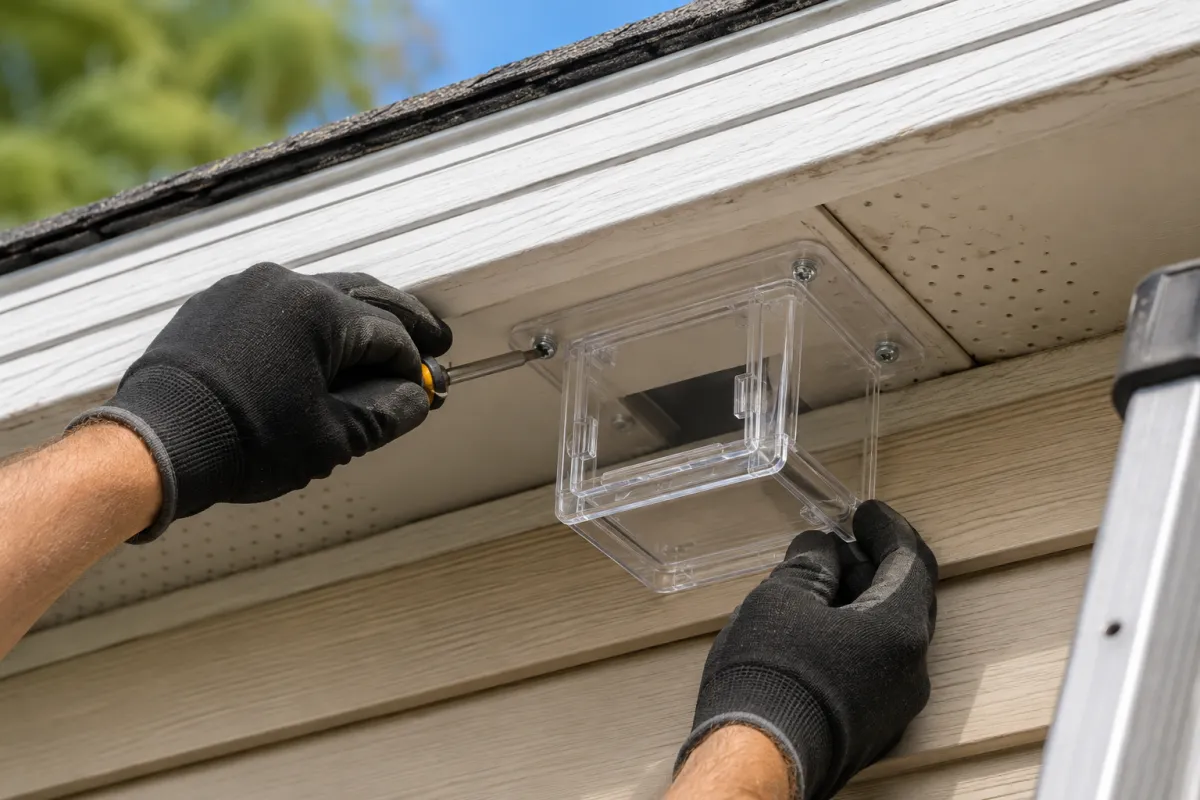
- Seal small, proven-empty gaps with the right stuff. CDC recommends steel wool held in with caulk for small holes, and hardware cloth, lath screen or metal sheeting for larger ones. NC State Extension warns against expanding foam on its own, because rats chew straight through it.
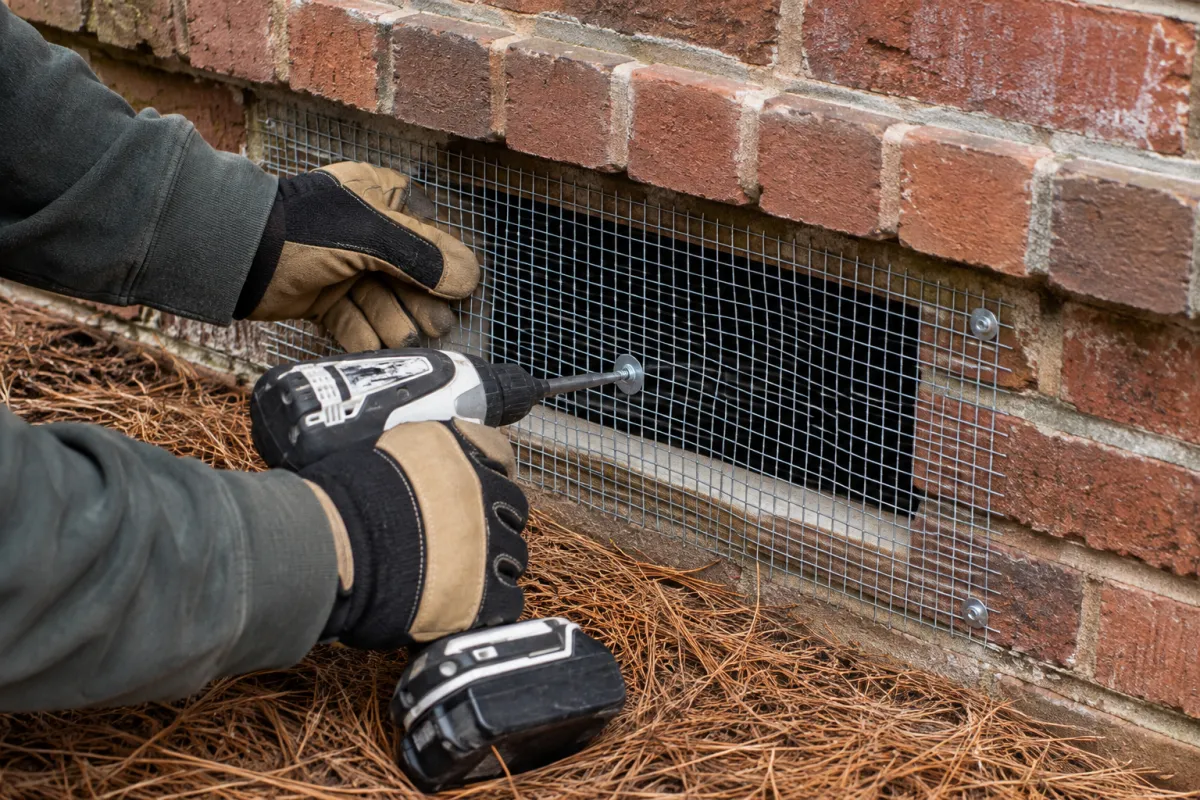
Two rules you do not break. Never seal a hole you have not proven empty: SCDNR says not to finish an exclusion until you are certain every raccoon is out, and a trapped animal will either chew a new exit or die in your ceiling. And never close a bat roost from May through mid-July, when SCDNR warns flightless pups would be sealed inside. If the noise has a daily schedule, the guide to signs of squirrels in the attic helps you pin down who is up there before you touch a hole.
When DIY is not enough: five signs the attic needs an operator
Some attic entries are past what a homeowner should handle, and these five are the honest line.
- You hear crying or chittering in spring. That is young in the insulation, and sealing now traps them.
- The hole is above the first story or on a steep pitch. A ladder on a Midlands roof in July is how people get hurt.
- It is bats, or a bat got into the living space. The calendar and the rabies-testing rule both apply, so read the bat exclusion page before doing anything.
- You sealed a hole and a new one appeared within days. Something is still inside, or there is a second entry you have not found.
- You found a latrine, soaked insulation or chewed wiring. That is a cleanup and possibly an electrician, not a Saturday project.
The sensible next step if your roofline made that list
If any of those signs fit your house, a phone call is the cheapest fix you have left. Call (833) 246-4378 and we connect you with a licensed local provider who holds an SCDNR Wildlife Control Operator permit for the Columbia area. Tell them where the gap is and what you hear. You get a price on the call and no obligation to book. Same-day and 24/7 emergency services are subject to provider participation, location, technician availability, and demand. Availability is not guaranteed and may vary by market and appointment capacity.
Here is the good news, and it is real. A house has a limited number of seams. Once each gap is closed with metal the animal cannot open, the attic goes quiet, and the scratching you have been lying awake for becomes a story you tell at the next cookout. For typical costs before you call, the wildlife removal cost guide for Columbia splits a quote into removal, exclusion and repair, and all services and costs covers what South Carolina law allows.
Attic entry points: questions we hear on the phone
What is the most common way animals get into an attic?
Through a gap at the roofline. Alabama Extension tells homeowners to check damaged siding, soffits, fascia boards and ridge vents, and SCDNR adds chimneys for raccoons. On Columbia houses the usual suspects are roof returns, soffit corners, gable vents and the fascia behind the gutter, and most of them can be spotted from the yard with binoculars.
How small a hole can animals get through?
Smaller than most people guess. CDC says a mouse fits through a hole the width of a pencil, about a quarter inch. NC State Extension says adult rats get through gaps of half an inch, and SCDNR has every gap of 3/8 inch or more sealed during a bat exclusion. Squirrels and raccoons do not wait for a gap that size, they chew or pull one open.
Can I seal the entry points myself?
Small gaps that you have proven empty, yes. CDC recommends steel wool held in with caulk for small holes and hardware cloth or sheet metal for larger ones. Never seal a hole with an animal still inside, and never close a bat roost from May through mid-July, when SCDNR warns flightless pups would be trapped. High rooflines and active dens belong to a permitted operator.
Do bats chew their way into an attic?
No. SCDNR explains that the gap between a bat's front teeth makes it impossible for bats to create holes, so they only use crevices that already exist, often ones opened by squirrels, black rats or raccoons. That is why a bat problem usually ends in a sealing job along the whole roofline, not a patch on one hole.